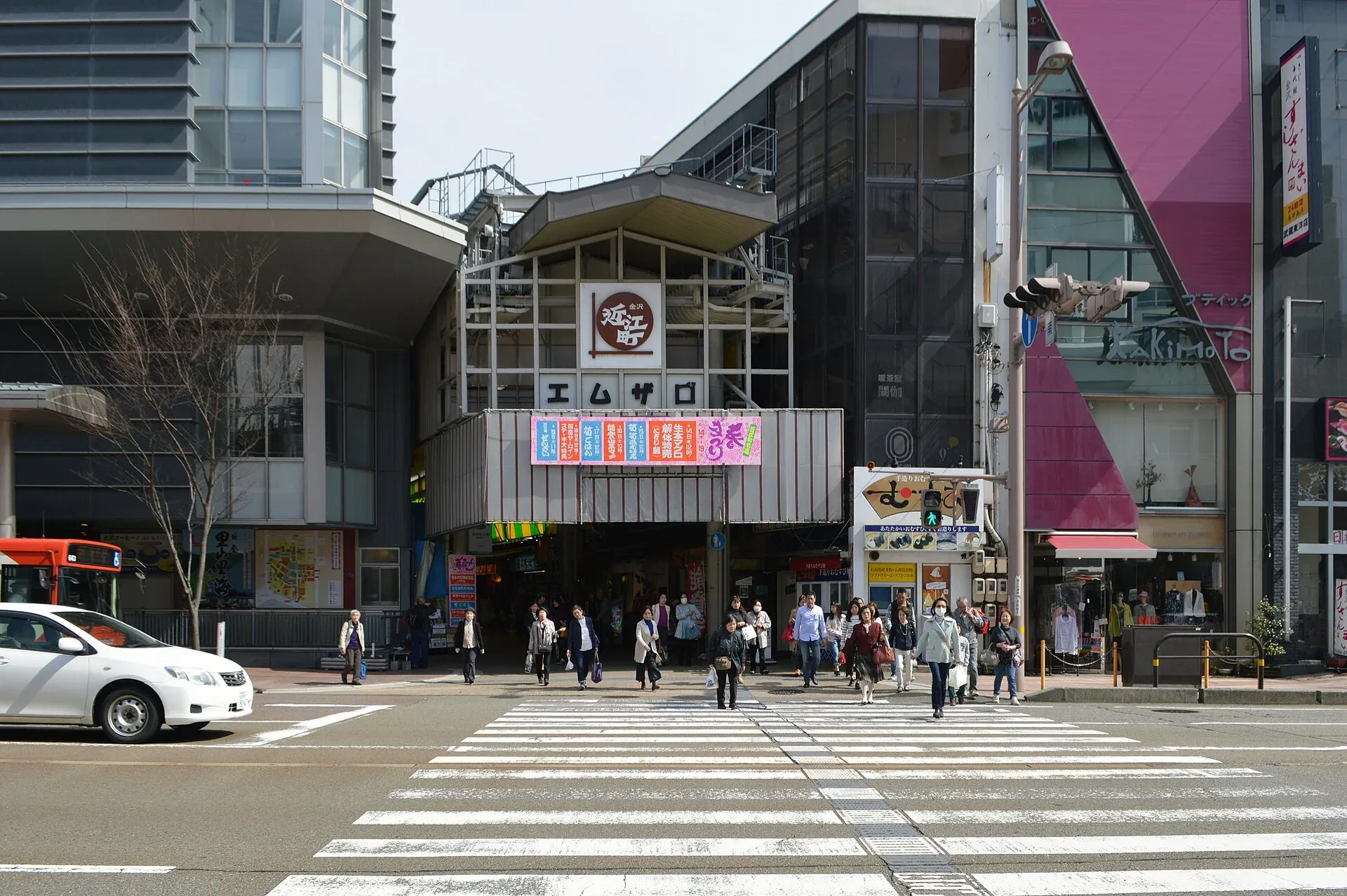
Kanazawa / Guide
Kaisendon at Seven — Omicho Market, Kanazawa, Runs on Three Clocks
Omicho Market近江町市場
The official listing for Omicho Market gives one line of opening hours: 9:00 to 16:00, varies from store to store. The Kanazawa tourist association gives that line in Japanese. Its English site gives the same line in English. It is the number you will build a morning around.
It is also the line that leaves out the first two hours of the day.
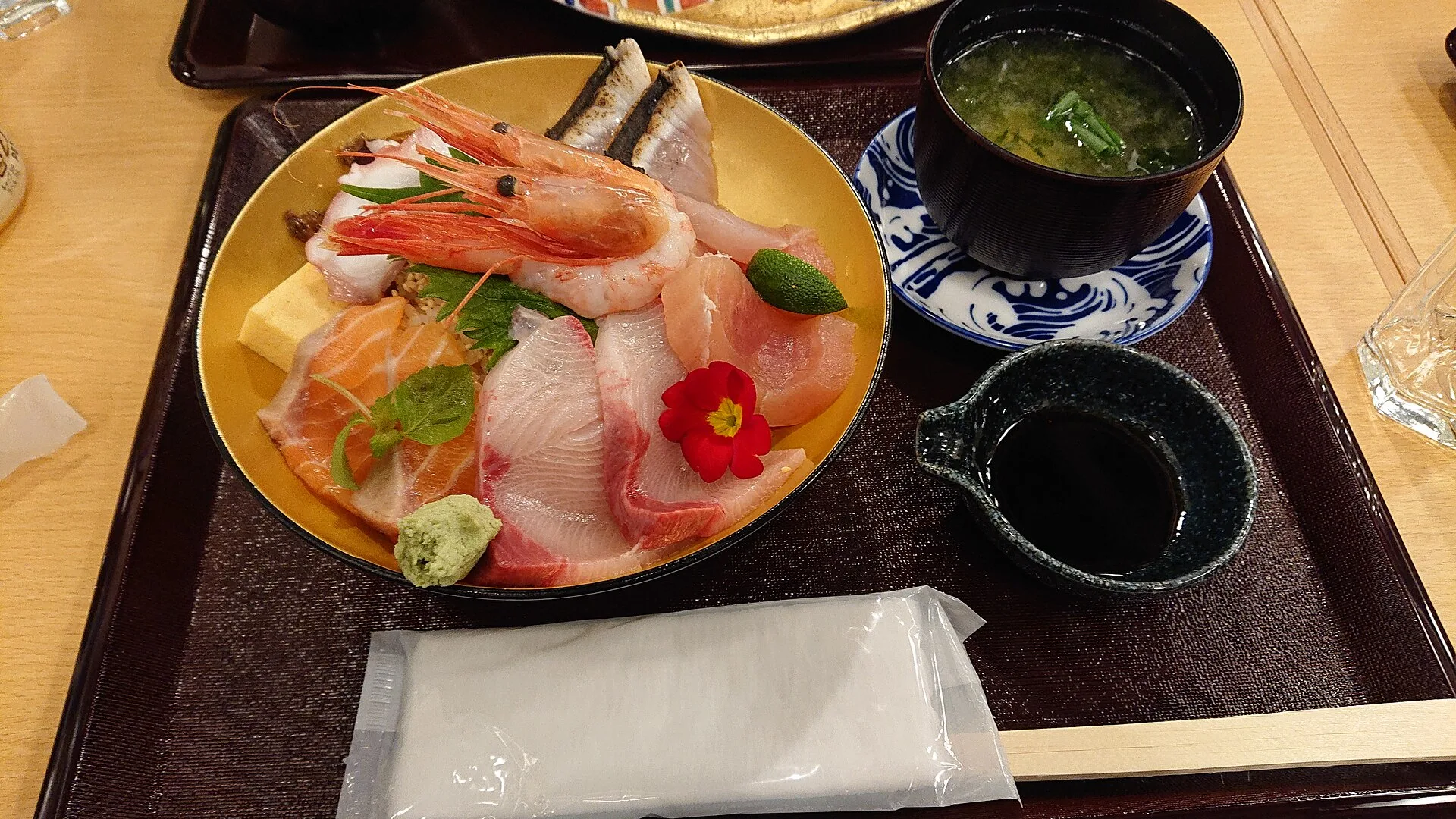
Four restaurants inside the market are listed as opening at seven in the morning, two of them kaisendon counters. A good many kitchens do not open until eleven. One floor of the market’s own building runs until eleven at night. And one of those seven o’clock counters is closed on Wednesdays — which is the day the Japanese official page warns about, and the English one does not.
Three clocks, then. Seven, nine, eleven. Here is what each of them opens.
I came to this market expecting Tsukiji in miniature: the auction, the pre-dawn hour, the visitor as a spectator at somebody else’s trade. There is no auction in the record — no official page describes one. What Omicho calls itself is a retail market, the city’s kitchen for three hundred years.
Once I stopped looking for a show, the opening times stopped reading like trivia and started reading like the shape of somebody’s morning.
Figure 1
Seven o’clock, which the summary does not mention
The prefectural tourism federation, Hot Ishikawa, is the official source that breaks the market down by trade. Shops selling goods, it says, generally run from around nine to five. Restaurants generally run from around eleven to five. Then it adds a clause the other official summaries leave out: some restaurants open as early as seven in the morning, and some stay open until around nine at night.
It does not name them. The Kanazawa tourist association’s own feature page on Omicho does, one restaurant at a time, and the seven o’clock list is not a single exception:
| Opens | Restaurant | Closes | Closed |
|---|---|---|---|
| 7:00 | Yutaka Suisan | 15:00 | Wednesdays |
| 7:00 | Noukabanna to Nariya | 15:00, last orders 14:30 | Generally open (New Year) |
| 7:00 | Ikiiki-tei Omicho | last orders 14:30 | Irregular |
| 7:00 | Noukabanna Ichibaya | 15:00, last orders 14:30 | Generally open |
| 8:30 | Hyakumangoku Udon | 15:00 | Irregular |
| 8:30 | Mawaru Omicho Ichiba Sushi | 20:00, last orders 19:30 | Generally open |
| 9:00 | Kaisendon Ichiba | 15:00 | Irregular |
| 9:00 | Ippuku Yokocho food court | 17:00, last orders 16:30 | Wednesdays |
| 10:00 | Kaisendon Hikariya | 16:00, last orders 15:30 | Mondays, plus irregular |
| 11:00 | Kaisendon Hirai | 15:00 | Wednesdays |
| 11:00 (9:00 Sun & hols) | Jimono-tei | 15:00 | Wednesdays |
| 11:00 | Sushi Enome | 15:00 | Thursdays |
Figure 2
Read the top of that table against the headline figure. The market’s published hours begin at nine. Four restaurants are listed as opening two hours before that — Yutaka Suisan and Ikiiki-tei serve kaisendon; the other two lead on kamameshi and on sushi and oden — and two more open at half past eight — and none of it appears in the one line that most English-language planning is built on.
One name in that table needs a second look before you set an alarm. The tourist association records Ikiiki-tei as closing irregularly. The market association’s own page for the same restaurant names the day instead: Tuesday, and Wednesday rather than Tuesday in a week where the Monday falls on a public holiday. Two official bodies, one restaurant, two different answers (both checked 20 September 2026). Plan a Tuesday visit as the one most likely to find it shut.
Seven is also the hour Kenrokuen starts charging: the garden admits visitors free before its paid hours begin, and those hours begin at 7:00 from March to mid-October. Kanazawa Castle Park, for its part, is unlocked from four in the morning between April and August, five in March, September and October, and the park itself is free at every hour — only certain buildings inside it are ticketed, from nine. So the seven o’clock list at Omicho lines up with the hour the garden’s gate starts taking money.
Nine o’clock: what the official hours are actually describing
Nine is when the market that the official line describes begins — the produce, the fish, the shops selling things to take away rather than things to eat at a counter.
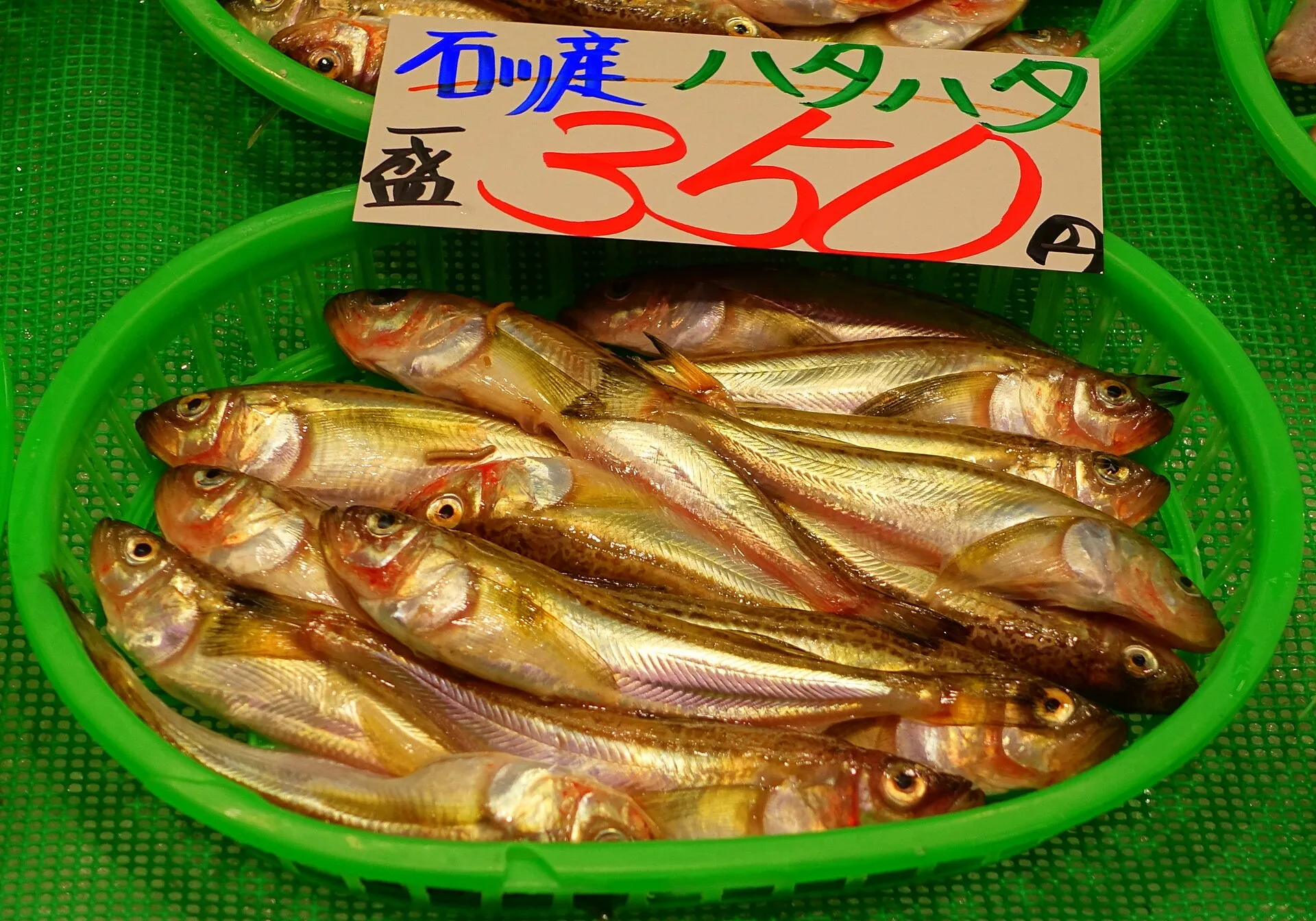
Kanazawa City’s own guide adds the detail the tourist pages do not: everything other than the restaurants finishes at seventeen hundred. The same note says the stalls carry the widest range in the morning, and that fish is often marked down from around four in the afternoon.
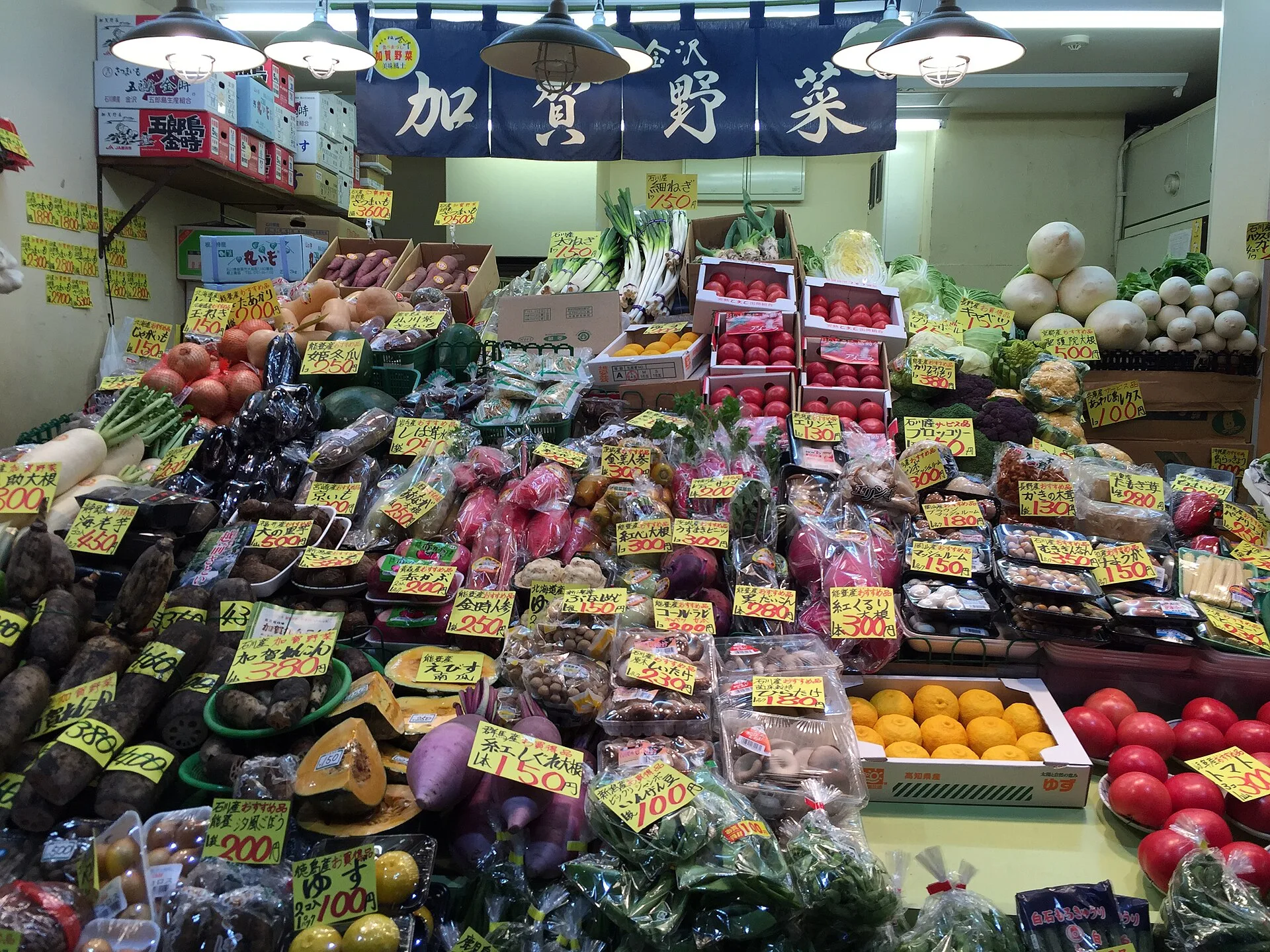
The building at the centre of it, Omicho Ichiba-kan, does not have a single set of hours either. It has four, one per floor, and they are published as such:
| Floor | What is on it | Hours |
|---|---|---|
| B1 | Food and everyday goods | 9:00–20:00 |
| 1F | The market floor — produce, fish | 9:00–17:00 |
| 2F | Restaurants | 11:00–23:00 |
| 3F | Children’s play area | 10:00–18:00 |
Figure 3
Read down that column and the three clocks are visible inside one building. The market floor keeps market hours. The restaurant floor above it opens two hours later and runs six hours longer.
Eleven o’clock, and what a bowl costs
Eleven is the hour on which most of the kitchens agree, and it is the hour the tourism federation names for restaurants generally.
They agree on the hour and on nothing after it. Hirai, a kaisendon restaurant with more than one branch inside and outside the market, publishes the hours for each branch on its own site. The main shop serves 11:00 to 15:00. The branch inside Ichiba-kan serves 11:00 to 17:00 — except on Wednesdays, when it stops at 15:30. Same company, same name over the door, two different closing times, and a third one on Wednesdays.
That is also where the prices are. Hirai lists twenty bowls. The plain kaisendon is ¥2,100. The house kaisendon, the one the manager recommends, is ¥3,000. A marinated bluefin bowl is ¥3,200, chutoro ¥4,500, otoro ¥5,300, ikura ¥4,800. The uni-and-ikura bowl has no price printed against it at all. It says market price.
So the spread on a single dish, in a single restaurant, is about two and a half times — and the top of the range is a blank that moves with what came in. At Hirai, the published prices start at ¥2,100 and run to ¥5,300, with one bowl listed at market price above that. A budget set from one of those numbers and a budget set from the other are not planning the same meal.
One column in that table above is worth reading twice: last orders. Ikiiki-tei opens at seven and stops taking orders at half past two. Ippuku Yokocho closes at five, and its kitchen stops at half past four — its bar stops twenty minutes later than that. Several others simply state thirty minutes before closing. A closing time is not the hour you can still order at, and the gap is published for some restaurants and not for others. Where it is not published, the tourist association’s answer to most questions about this market applies: ask the shop.
After five, which the guides stop writing about
Seventeen hundred is where most English write-ups of Omicho end, and it is a real line: Kanazawa City says everything other than the restaurants is finished by then.
The restaurants are not. The second floor of Ichiba-kan is published as open until 23:00. The tourism federation says some places run until around nine at night. The basement runs to eight, and so does the conveyor-belt sushi.
Set the evening hours beside the headline figure and the gap is the whole point. The official summary — 9:00 to 16:00 — describes a market that has been over for seven hours by the time the restaurant floor above it closes.
Wednesday, in Japanese only
Here is the sentence, from the Kanazawa tourist association’s Japanese page for Omicho Market:
Wednesdays: a comparatively large number of shops take their regular day off, so please enquire with each shop.
And here is the corresponding field on the same organisation’s English page for the same market:
New Year’s holidays
That is the complete list of closures an English-language visitor is given. The Wednesday line is not translated, summarised or moved elsewhere on the page. It is absent.
Figure 4
The association’s feature page puts a number to it: on Wednesdays roughly twenty per cent of shops are closed, though there is still plenty open to shop for. The tourism federation adds that some shops also close on Sundays, tied to the wholesale market’s own closing days.
Counting the shops one by one gives a sharper answer than a single percentage. The market association keeps a page for each of its 156 shops, and 42 of those pages name a Wednesday rest day — nearer a quarter of the market than a fifth. Where those 42 sit matters more than the total. Sixteen of the 25 fishmongers rest on Wednesdays. One of the 20 greengrocers does. Nine of the 43 restaurants do. Wednesday empties the fish counters and barely touches the kitchens, which makes it a good morning to eat here and a poor one to carry anything home. (Counted from the market association’s shop pages, 20 September 2026.)
Twenty per cent is not a shut market, and the table above shows what it looks like from the inside. Of the twelve restaurants the association lists, four close on Wednesdays — Yutaka Suisan, the Ippuku Yokocho food court, Hirai and Jimono-tei. Three others state they are open in general. So a Wednesday at Omicho is not a lost day. It is a day on which the specific restaurant you read about last night may be closed while others on the same list are open, which makes it the one day of the week worth checking a single restaurant’s own hours before you set out.
Yutaka Suisan is the one to know about, because it is the seven o’clock counter that also appears on the market’s own website, with the same hours and the same Wednesday. If the early bowl is the reason you set an alarm, the day of the week decides whether that alarm was worth it — and nothing on the English page tells you so.
Its own site carries one more line that the listings leave out: it trades on public holidays, and through consecutive holidays. So a Wednesday that happens to be a holiday is a Wednesday it serves breakfast. The morning to avoid is the opposite case — the Wednesday after a Monday public holiday, when Yutaka Suisan takes its usual rest day and Ikiiki-tei has moved its own onto the same date.
I read the two pages side by side because the same thing happened at Kenrokuen, where the Japanese page carries payment detail the English page leaves out. Twice now in this series, the condition has sat on the Japanese page only.
Where I stand
Set the alarm.
Omicho at eleven is a lunch stop, and Kanazawa is not short of those. Omicho at seven is four restaurants open two hours before the market they stand inside is. That gap is the thing I could not find written down anywhere else in the record, so that is the version of this visit I would plan.
What I would give up for it: the ¥5,300 otoro at Hirai, which does not start serving until eleven. Not because one bowl beats the other on the plate — that argument has no end — but because only one of them is hard to get anywhere else.
And the one thing I would check the night before: whether the morning I have picked is a Wednesday. On the shop’s own page, in Japanese, not on the English listing. That check is the reason this article exists.
Not while you walk
English-language writing about Omicho does not agree on whether you can eat as you go. Of the seventeen English-language pages read for this article, five describe eating while walking as impolite, and one tells readers they can eat as they walk.
The Kanazawa tourist association settles it, in a sentence on its feature page: eating while walking is prohibited inside Omicho Market, and food should be eaten in the eating space that each shop provides.
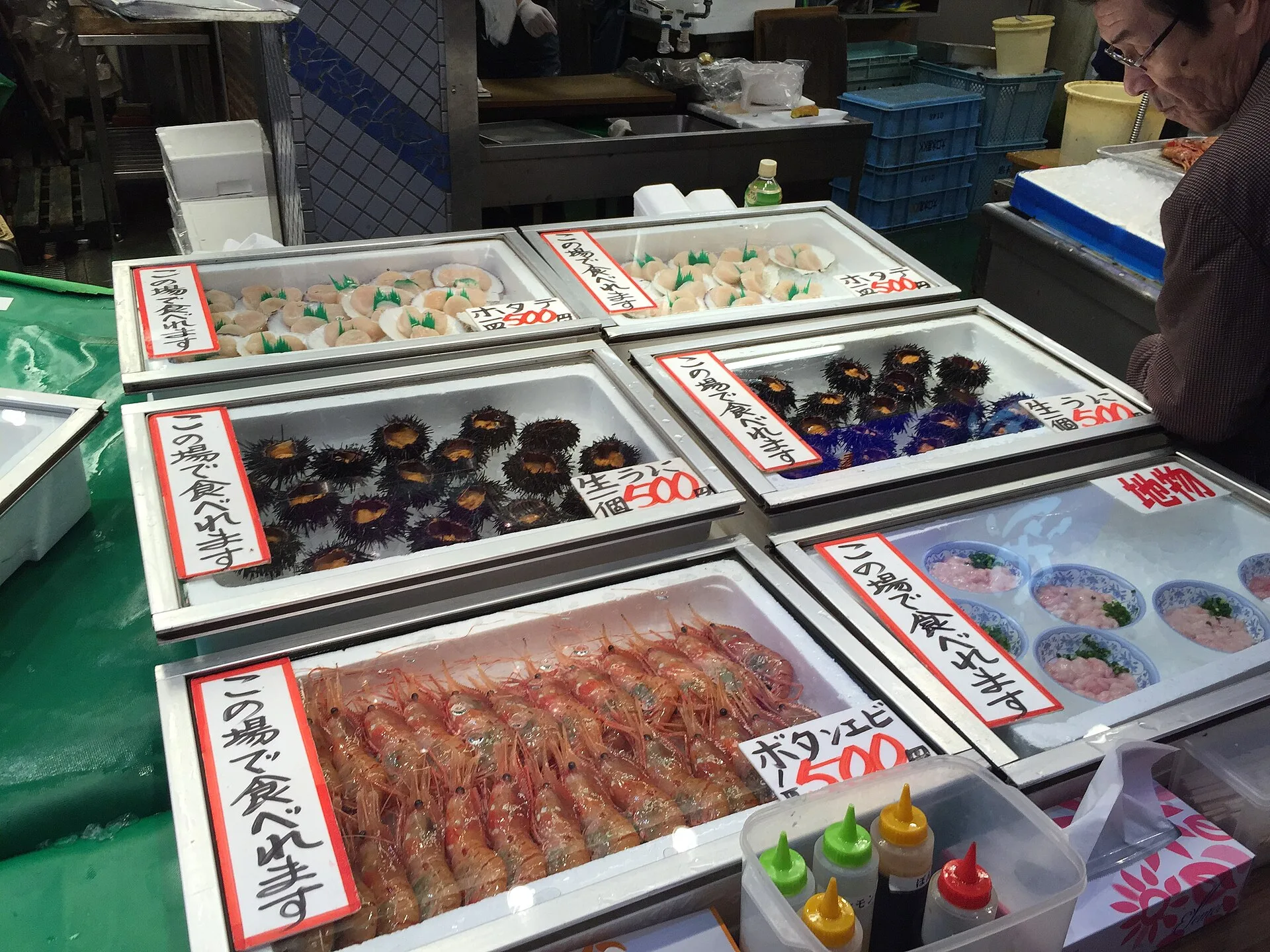
Not discouraged. Not frowned upon. Prohibited, in the official text, with the alternative supplied in the same sentence — the seating belongs to the shops, so the question to ask when you buy is where that shop’s space is. Ichiba-kan’s second floor is restaurants; its basement has food space too, and the food court on the nine o’clock line is built for standing and eating on the spot.
Seven minutes from a castle gate
Omicho Market sits at Musashigatsuji, and the walk to it is where the official sources start disagreeing with each other.
The market’s own pamphlet says fifteen minutes on foot from Kanazawa Station, ten minutes by bus. The tourist association says twelve minutes on foot from the station’s Kenrokuen exit, five by bus. Its feature page gives a distance instead of a time: about one kilometre, straight ahead from the station’s Tsuzumi-mon gate. The English page drops the station walk altogether and gives only the bus stop, which is a minute away.
Between the market and the sights, one number exists and one does not.
The one that exists comes from the castle side: Ishikawa Prefecture’s guidance for Kanazawa Castle Park lists Kuromon gate as seven minutes from Musashigatsuji and Omicho Market. That is a gate-to-market figure, not a gate-to-counter one, and it is enough to make the castle and lunch a single outing.
The one that does not exist is Kenrokuen to Omicho. I went looking for an official walking time between the garden and the market and there isn’t one — not on the market’s site, not on the city’s, not on the prefecture’s, not on the tourism federation’s, not on the English pages of any of them (checked 13 September 2026). The market’s pamphlet map shows where Kenrokuen is. It does not say how long it takes to get there.
Figure 5
Which leaves the day looking like this, built only out of figures that someone official has published:
Kanazawa Station → Omicho Market, twelve to fifteen minutes on foot depending on which official page you read, about one kilometre, or five to ten by bus. Omicho Market → Kanazawa Castle, seven minutes to Kuromon gate. Kanazawa Castle → the Kenrokuen-shita bus stop, five minutes from the Ishikawa-mon exit. The castle park and the garden are served by that same stop; the walk between the two entrances is not given a figure on any official page checked for this article.
Run it in the other direction and the clocks do the ordering for you. The castle is open and free at four in the morning in summer. Kenrokuen lets you in free before its paid hours start. The park stays free all day, and the garden’s gate does not start taking money until seven — the same hour that, seven minutes from Kuromon gate, the first four restaurants on the association’s list are listed as open.
The practical page
| Market hours, as published | 9:00–16:00, varies by shop |
| Shops other than restaurants | Finished by 17:00 |
| Restaurants, generally | Around 11:00–17:00 |
| Restaurants open at 7:00 | Four on the tourist association’s list; two of them serve kaisendon |
| Latest published closing | 23:00 (Ichiba-kan second floor) |
| Closed | 1–4 January as published; varies by shop (Hirai’s Ichiba-kan branch lists 1 January only) |
| Wednesdays | Around 20% of shops closed; four of the twelve restaurants listed |
| Last orders | Published for some restaurants, not for others; often thirty minutes before closing |
| Eating while walking | Prohibited; eat in each shop’s space |
| Card payment | Depends on the shop |
| Kaisendon prices, one restaurant | ¥2,100–¥5,300, plus market price bowls |
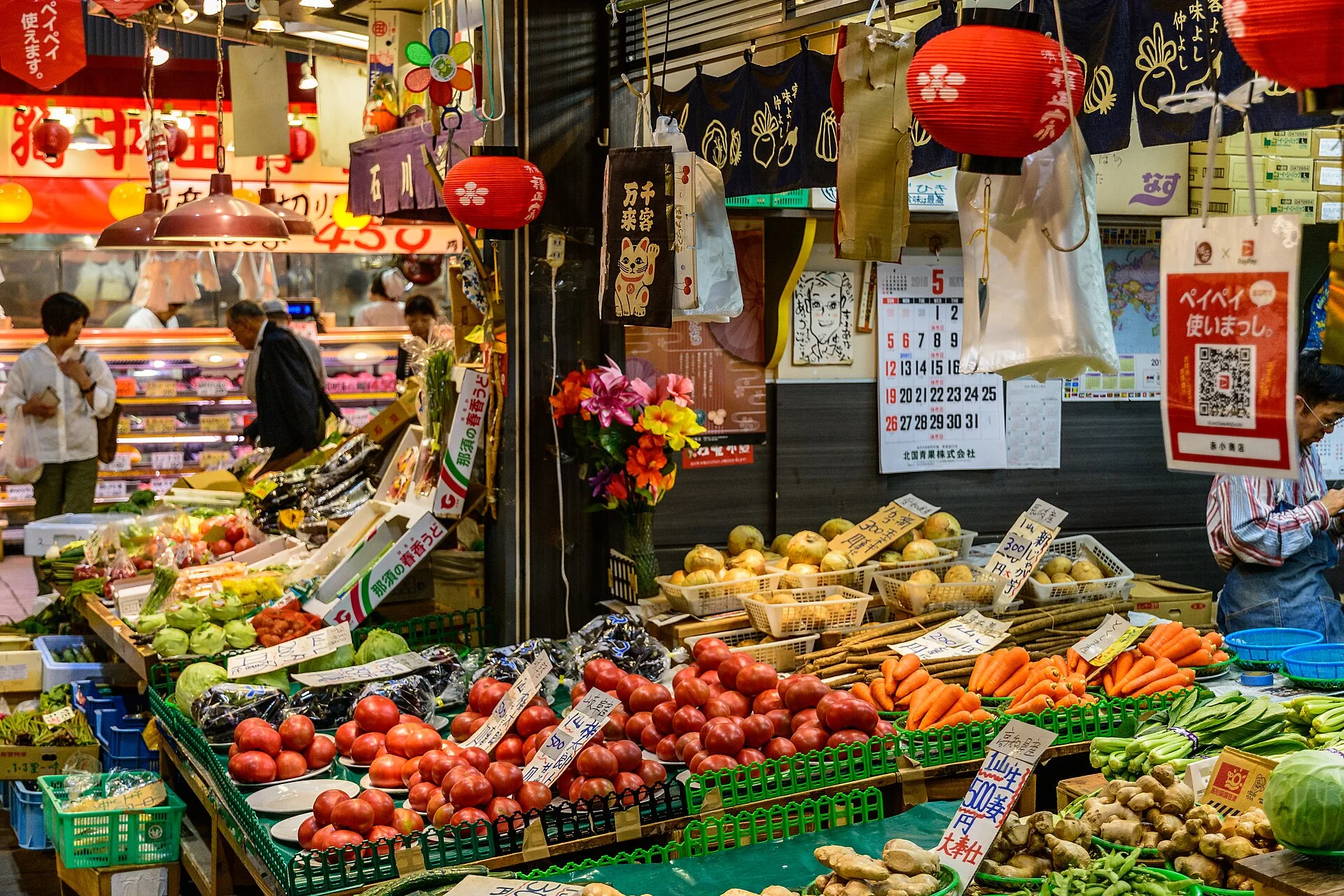
One more line from the Japanese page that does not appear in English: whether a shop takes cards is up to the shop. No official page checked for this article says that any particular shop is cash only, and none says the market as a whole takes cards. Both statements are absent, which is not the same as either being false. Carry cash.
What the market calls itself
The market’s own website describes Omicho as Kanazawa’s kitchen for three hundred years — the association’s feature page dates the three hundredth year to 2021 — and it calls itself a retail market.
That second phrase is doing more work than it looks. A great deal of English-language writing about Japanese food markets is written in the shape of Tsukiji: the auction, the pre-dawn hour, the visitor as spectator at a trade taking place for someone else’s benefit. I went looking for an official description of an auction at Omicho and did not find one (checked 13 September 2026). What the official text claims is the other thing — a place that sells to the person standing in front of the counter.
Which is why the clocks are shaped the way they are. The market keeps shop hours. The counters keep kitchen hours, and four of them start two hours before the market does.
Somebody at Yutaka Suisan unlocks a door at seven in the morning, two hours before the market they stand inside is officially open, and closes it again at three in the afternoon. The tourist association’s English page does not carry this. The market’s own site does, the Japanese page does, and now so do you.
Which morning you choose decides whether that door is open. On Wednesdays, it stays shut.
Everything on this page was read from official sources and the restaurants' own sites on 13 September 2026, and the Wednesday counts, Ikiiki-tei's rest day and Yutaka Suisan's holiday exception were added after a second check on 20 September 2026.
Sources and images
- Kanazawa tourist association — the market’s published hours, the closures field, the Ichiba-kan floor hours, card payment, and the feature page listing twelve restaurants with their opening, closing and last-order times, the Wednesday proportion, and the ban on eating while walking. Japanese and English pages read against each other; the Wednesday notice appears only in Japanese. Checked 13 September 2026.
- Ishikawa prefectural tourism federation (Hot Ishikawa) — the breakdown by trade, the 7:00 and 21:00 outliers, and the Sunday closures tied to the wholesale market. Checked 13 September 2026.
- Kanazawa City — the 17:00 finish for shops other than restaurants, and the morning range and afternoon markdowns. Checked 13 September 2026.
- Omicho Market (official site and pamphlet) — the market’s description of itself as a retail market and as the city’s kitchen for three hundred years, Yutaka Suisan’s hours and Wednesday closure, and the walk from Kanazawa Station. Checked 13 September 2026.
- Omicho Market Promotion Association — the individual shop page for each of the market’s 156 shops, from which we counted the Wednesday rest days by trade, and which names Tuesday as Ikiiki-tei’s rest day. Checked 20 September 2026.
- Yutaka Suisan (restaurant’s own site) — the line stating that it trades on public holidays and through consecutive holidays. Checked 20 September 2026.
- Hirai (restaurant’s own site) — branch hours and the twenty published bowl prices. Checked 13 September 2026.
- Ishikawa Prefecture, Kanazawa Castle Park — the seven minutes from Kuromon gate. Checked 13 September 2026.
- Photographs: the western entrance by DimiTalen (CC0, Wikimedia Commons); the kaisendon by 経済特区 (CC BY-SA 4.0, Wikimedia Commons); the fish counter by Daderot (CC0, Wikimedia Commons); the produce and the shop sign by bryan… from Taipei, Taiwan (CC BY-SA 2.0, Wikimedia Commons); the payment sticker by dconvertini (CC BY-SA 2.0, Wikimedia Commons).
- Diagrams drawn by us from the hours published by the sources above.