Kanazawa / Guide
Kanazawa Castle Has No Keep — Walk It in Three Layers
Kanazawa Castle金沢城
In August, the gates open at four in the morning, and nobody takes any money from you.
That isn’t a one-day event. Kanazawa Castle Park unlocks its entrances ahead of official hours all year — 4:00 from April through August, 5:00 in March and again in September and October, 6:00 through the winter — and the park itself is free at every hour of every day.
So you can be standing inside a castle before dawn, which raises a fair question: standing inside what, exactly?
Because the thing you came for isn’t here. The keep burned down in 1602, struck by lightning. The three-storey turret built to replace it burned in 1631, was rebuilt, and burned again in the great fire of 1759. After that, nothing. In 1881 an army fire took most of what was left.
Every English page about this place tells you that much. Almost none tell you what to do with it — and that is the whole difference between an hour spent looking for a tower that is never coming, and an hour spent reading the hill.
Here’s what to do with it. As you walk, every building you pass belongs to one of three layers:
One — the three buildings that survived the Edo period. Three, in the whole park. Two — the timber reconstructions, put up one at a time since 2001. Three — the one going up right now, behind a temporary roof 26.7 metres tall.
Learn to place each building as you meet it, and the walk stops being a lawn with walls around it. Start at the east side, where the bus stop is, and you’ll meet all three layers in under two hours.
Figure 1
Before nine: the gate, and the plaza where everyone looks for the tower
The stop is called Kenrokuen-shita / Kanazawa-jo, and it’s the same stop that serves Kenrokuen’s Katsurazaka gate — the two are close enough to share it. Five minutes’ walk brings you to Ishikawa-mon, and you should stop under it rather than hurrying through.
The gate you walk through was finished in 1788, after the great fire. Almost everything around it burned in 1881. The gate did not.
It was designated an Important Cultural Property in 1950, and the castle’s own site makes a claim for it that is easy to read past: the buildings making up its masugata box-gate complex all survive from the feudal period — and there is exactly one other place in Japan where that is true, the Ōte-mon of Osaka Castle.
Two, in the country. You walked through one of them on your way in.
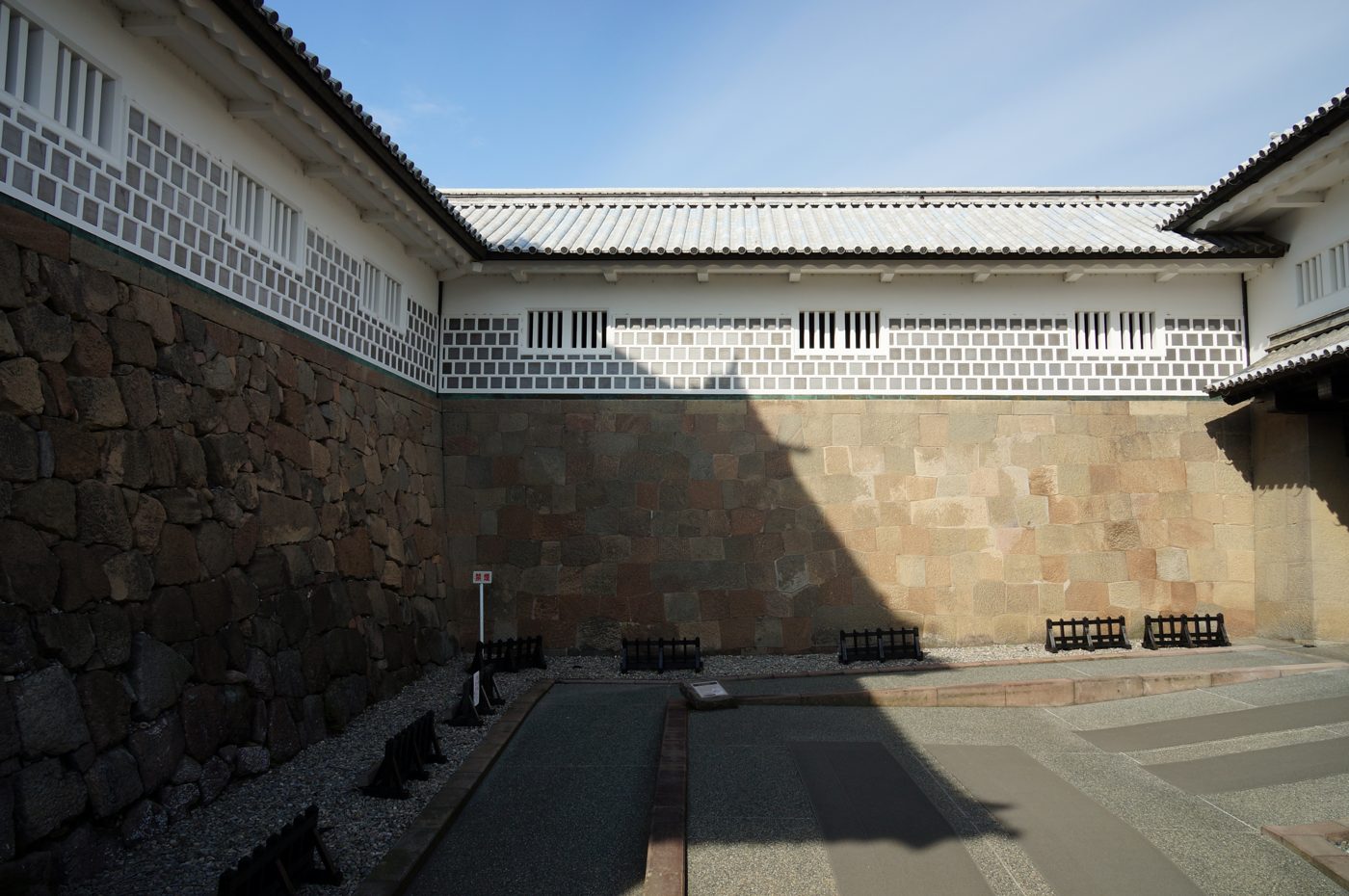
Inside the gate there’s a rest house and information centre: toilets, coin lockers, free wheelchairs, a guide desk, and the stamp for the Hundred Famous Castles, if you’re collecting. The site doesn’t publish its opening hours, so before dawn, assume nothing is staffed.
Then the ground opens out into the Sannomaru plaza: the widest open ground in the park, and the first thing the park’s own suggested route brings you to.
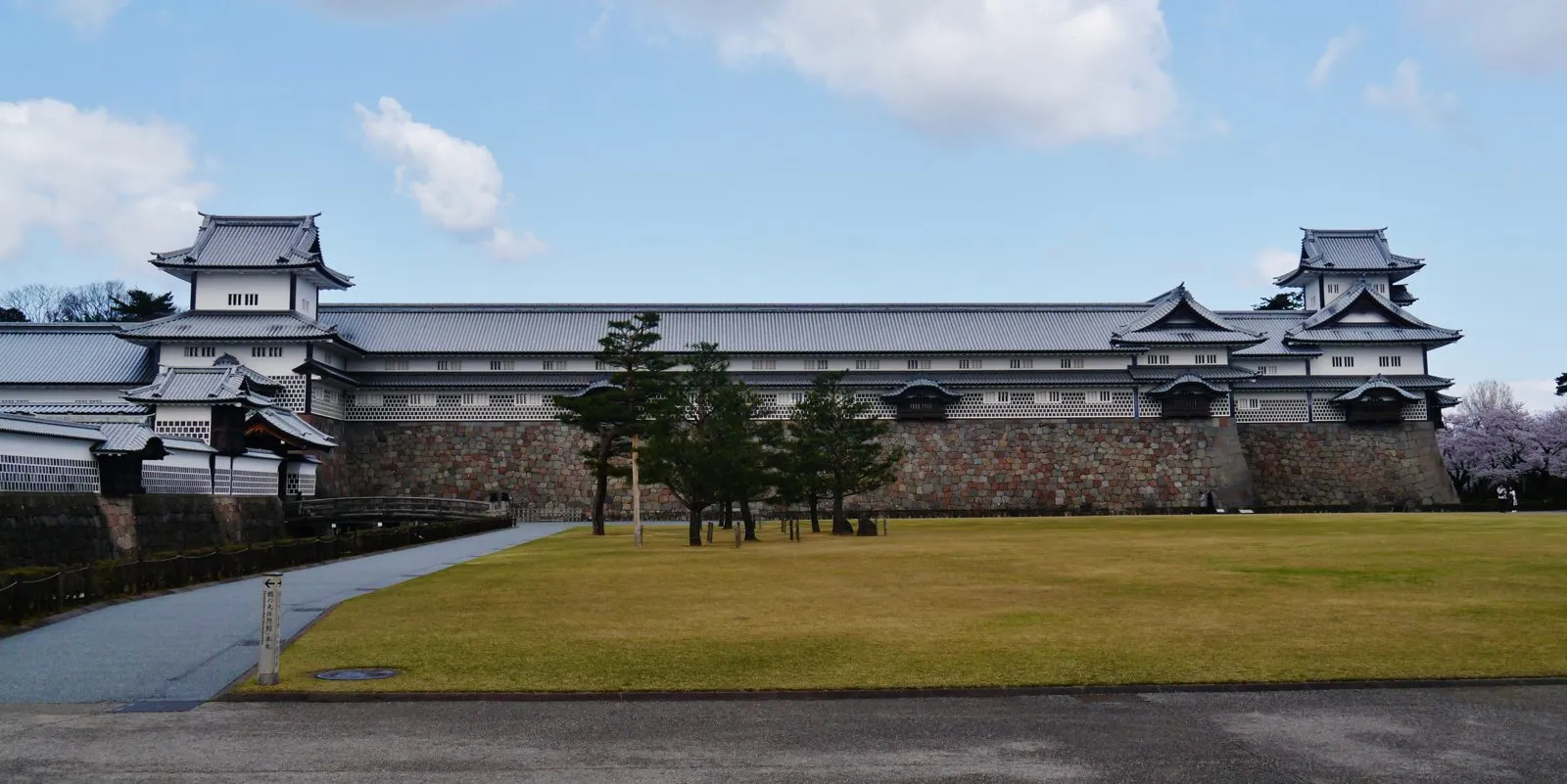
Nothing is going to rise out of the middle of it. What’s in front of you instead, along the plaza’s southern edge, is a long line of white-walled buildings: Hishi-yagura, the Gojikken Nagaya storehouse, the Hashizumemon Tsuzuki-yagura turret and the Hashizumemon gate. Layer two. They opened in 2001, 120 years after fire took the originals, built in timber by traditional methods.
At this hour you can walk the whole line from outside, but nothing is open yet. The doors unlock at nine.
About the tower that isn’t there
While you’re waiting for nine o’clock, the question worth sitting with is not where did the keep go — that part is easy, lightning, 1602 — but why a domain of a million koku never put it back.
The official explanation for the empty space is political. The Maeda held a domain of a million koku, and the castle’s own account says it is believed they refrained from rebuilding out of deference to the shogunate in Edo, as tozama — outside lords, never fully counted as allies.
Take that for what it is: an interpretation, offered carefully, by the body that knows the place best. But it changes what you’re looking at. The gap in the middle of this park isn’t neglect, and it isn’t poverty. It’s a decision, made by people who could have afforded the alternative, and it has held ever since.
That is the part that made this page worth writing. Not the fire — castles burn, and most of Japan’s did. The interesting thing is the four hundred years of deciding that followed it: what to put back, what to leave empty, and who to hand the work to. That decision is still being made on this hill, in public, this month.
Figure 2
I went looking for a drawing of it. There isn’t one in the official record: no plan of its shape, no statement of exactly where it stood. It stood for about fifteen years, four centuries ago, and the paperwork that survives doesn’t tell you what it looked like.
There is no official page describing any plan to build one now. The money and the carpenters are going somewhere else, and you’ll walk past it in about twenty minutes.
Nine o’clock: the doors open, and most of them are free
The ticketed part of Kanazawa Castle is smaller than people expect. It is exactly that one group of buildings on the plaza’s south edge — Hishi-yagura, Gojikken Nagaya, Hashizumemon Tsuzuki-yagura and Hashizumemon. Adults ¥320.
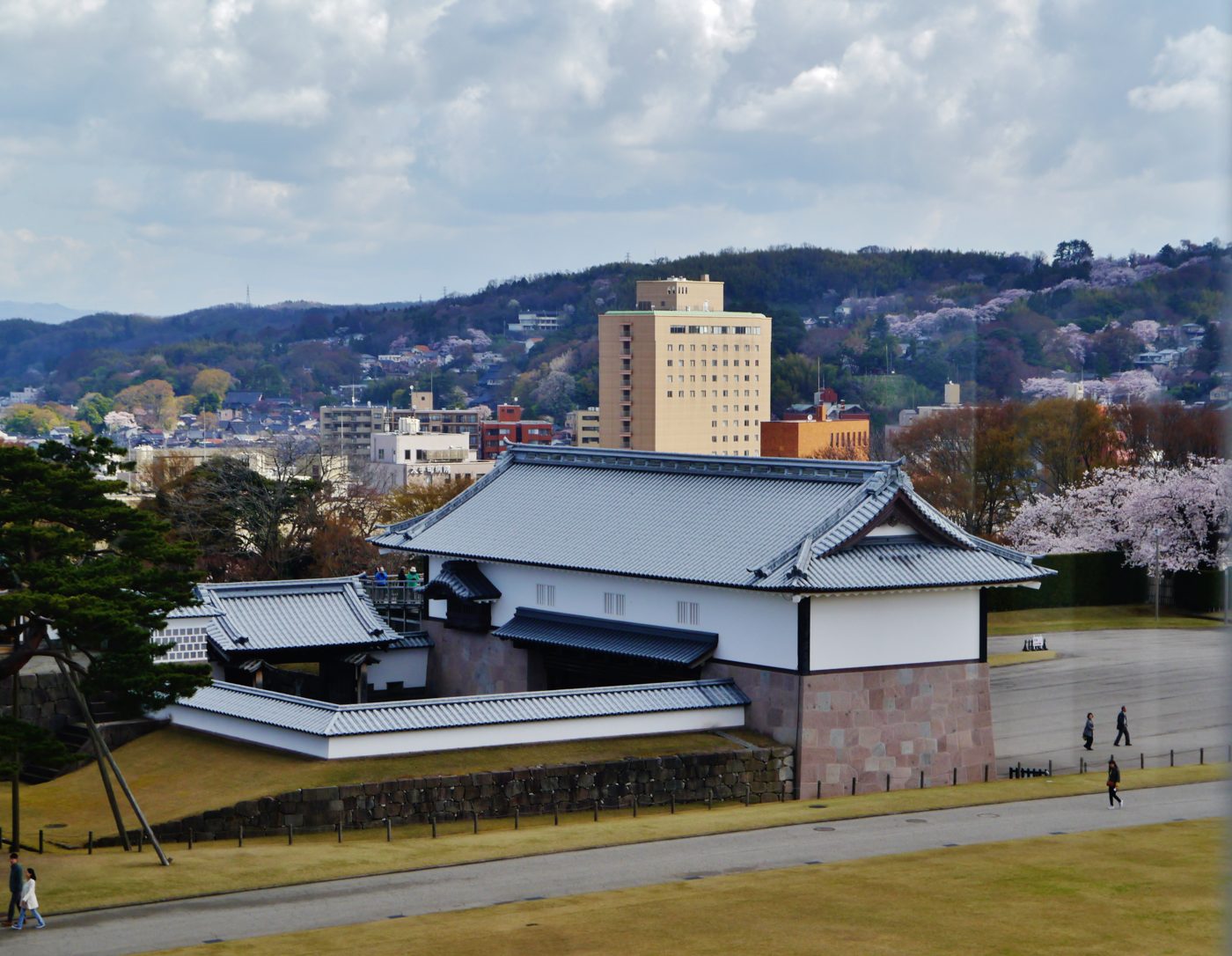
Kahoku-mon, a few minutes west along the plaza’s north side, is free to walk into. Layer two again — 2010, about 130 years after the original was taken down — same hours, 9:00 to 16:30. So is Nezumitamon at the far end of the park, which you’ll reach later.
If you want a human being to explain any of this, the guide desk at the Ishikawa-mon rest house has free English-speaking volunteers, daily except over New Year, from 9:30 until 15:30. No booking; you turn up. There’s a second desk at the garden end of the park.
The middle of the park is a building site
Walk south past the 2001 buildings and you come out into the Ninomaru plaza, where the map stops naming buildings and starts naming a project: the site of the Ninomaru Palace reconstruction.
This was the largest building in the castle — the lord’s residence and the seat of government, over 3,200 tsubo, more than sixty rooms. It burned in the army fire of 1881 and has been missing from this hill for nearly a century and a half.
A committee spent 2018 to 2020 working out whether it could be rebuilt at all, and concluded the public wing could, while the private quarters needed more research. A basic plan followed in 2021. Ground was broken on 9 March 2025.
What stands here now is the shelter: 26.7 metres of temporary roof over a foundation that doesn’t exist yet. Underneath it, as of early September 2026, workers are tying reinforcing bar for the concrete base. The excavation finished on 5 August. The frame is expected to be standing around 2030, and the first phase complete around 2033, with an official “if things go smoothly” attached.
The prefecture gives two reasons for the project beyond the building itself. One is to pass traditional carpentry on to the next generation. The other is to put work in the hands of craftspeople whose livelihoods were hit by the Noto Peninsula earthquake of 2024.
I read the second one twice. It is written into the official purpose of the project, in the same sentence as the joinery.
You can’t go in. The shelter opens only for occasional site tours — it was thrown open for a single day in April 2026 and more than a thousand people came. What you can do, free, during normal hours, is walk the hoarding around it: reconstruction drawings, reproductions of the painted screens that will go inside, and finds from the archaeological dig. There’s a camera in the shelter feeding a live stream on the castle’s YouTube channel.
Five minutes at the hoarding is enough. What it buys you is the third date on your timeline — 1788, 2001, 2033 — and once those three numbers are in your head, the rest of the hill is readable.
Before you move on: the Tsuru-no-maru rest house sits just east of here, open 9:00 to 18:00 in summer, 9:00 to 17:00 in winter, every day of the year. Its theatre shows a ten-minute VR film of the palace as it was — free, with English subtitles. (There’s a smartphone app that does something similar outdoors, if you’d rather see it standing where it will be.)
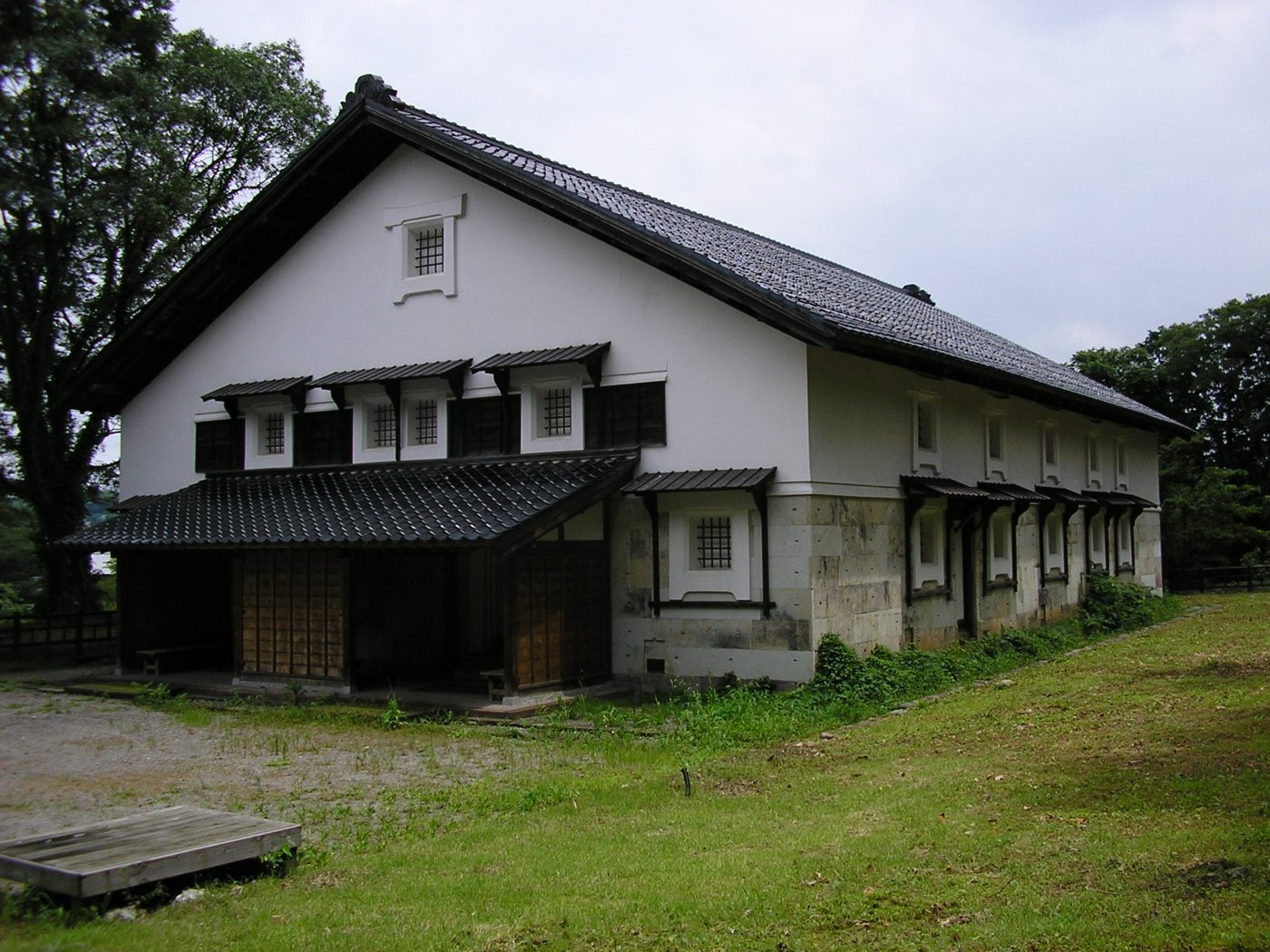
And immediately south of the rest house, easy to walk straight past, is a plain earthen-walled storehouse. That’s the Tsurumaru Warehouse, built in 1848, designated in 2008, and among the largest of its kind standing inside a Japanese castle. Layer one — the second of the three.
The 2024 earthquake cracked its plaster and damaged a stone beam, and it was repaired by 2025. The building you’re looking at survived the Meiji fire, the war, and the twentieth century. It also survived the year before last.
The building the short route skips
The park publishes a suggested route for a first visit — its website puts it at sixty minutes — and it runs the way you’ve just walked: in at Ishikawa-mon, across Sannomaru, along the 2001 buildings, through Ninomaru, out into the garden.
The map shows that line turning back before it reaches the Honmaru grounds. I would not follow it, because the Honmaru is where the third survivor is.
Sanjikken Nagaya was first built in the early 1600s, lost in the 1759 fire, and rebuilt in 1858 — ten years before the shogunate ended. Designated in 1957. The lead tiles on its roof date from a restoration in 1969.
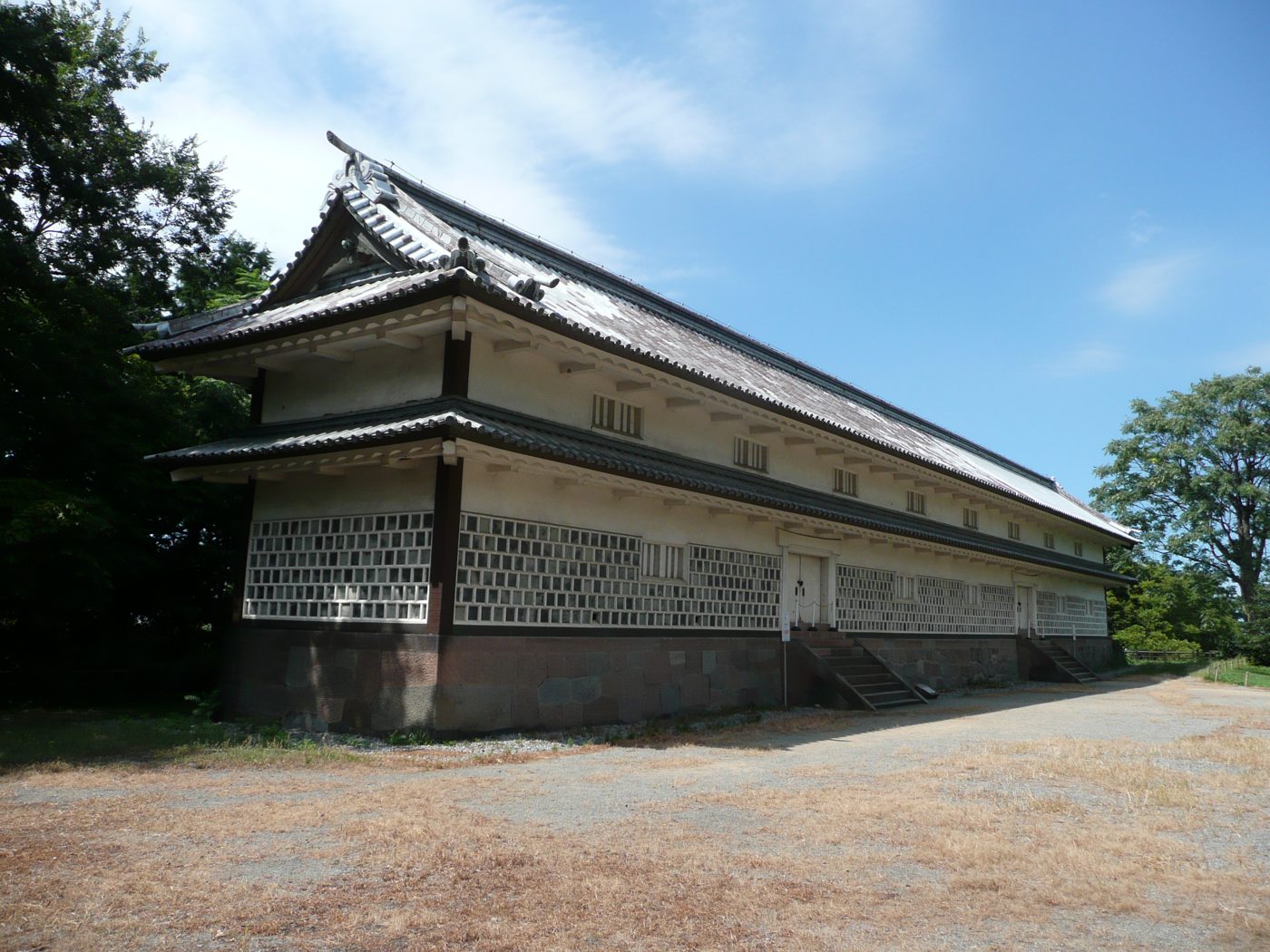
Three buildings in this castle are older than 1868. You walked through the first one on your way in. The second was that storehouse behind the rest house. This is the third, and the official short route never reaches it.
To get there, leave the Ninomaru plaza at its south-west corner, past the Gokuraku Bridge and the stretch of wall the castle calls shikishi-tanzaku-zumi, where the stones are cut in rectangles like sheets of poem paper. Keep going and the Honmaru grounds open up, with Sanjikken Nagaya at the far end. The park’s two-hour route does include this. Budget the extra twenty minutes.
Figure 3
The garden end, and the bridge that gives the game away
The path out of Ninomaru’s south-west corner leads to Gyokusen’inmaru Garden, and at its edge sits Gyokusen-an, a rest house looking out over the water. Tea is served 9:00 to 12:00 and 13:00 to 16:30 — matcha with a house-made sweet, ¥1,000. Walking in and sitting down costs nothing. There’s a second English guide desk here.
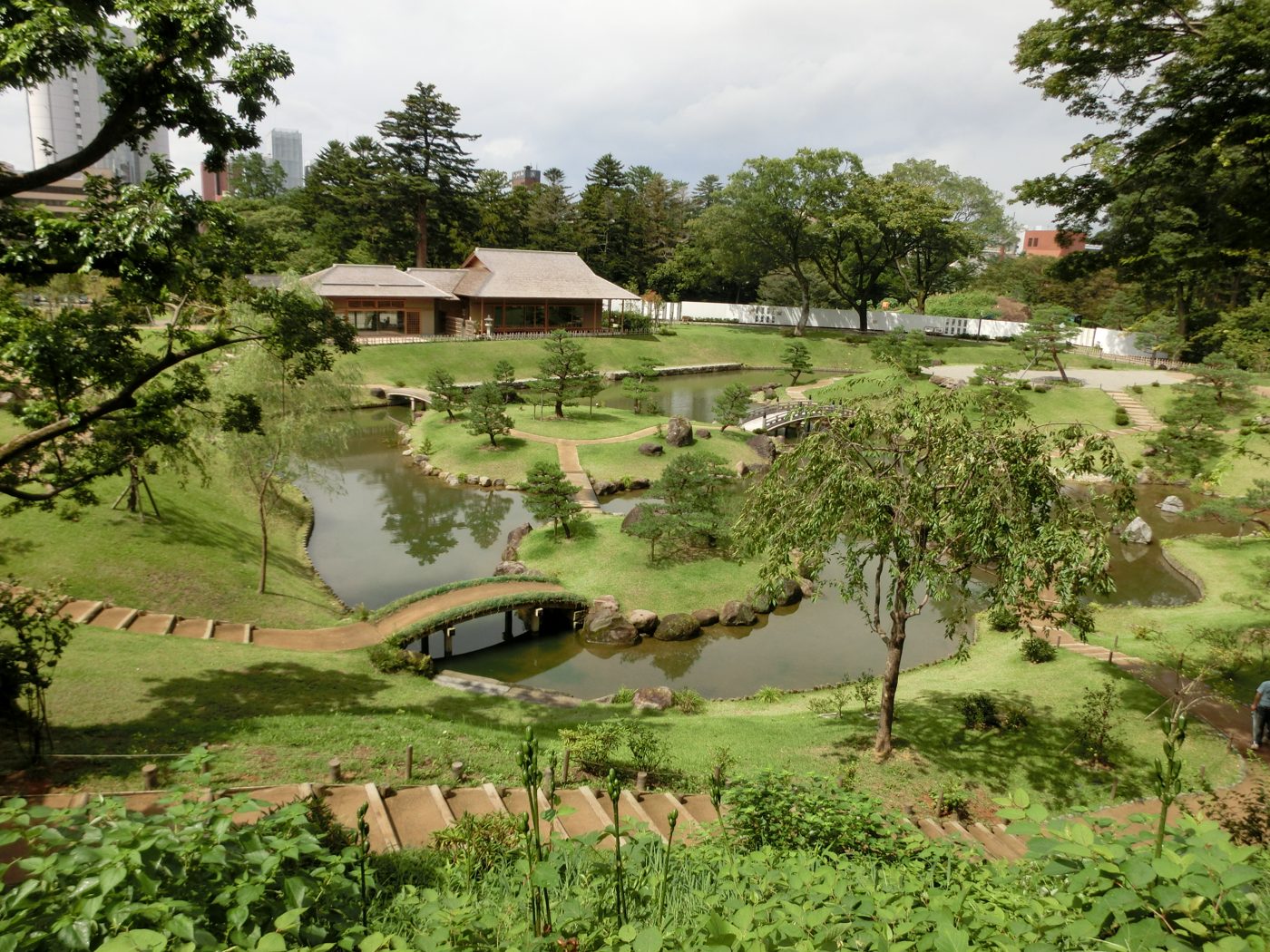
One warning before you head this way. Imori-zaka, the slope between the Ninomaru plaza and the Gyokusen’inmaru exit, is steep enough that the park states plainly it can’t be used by wheelchair. If you’re rolling, come into the garden from the Gyokusen’inmaru entrance directly, or from the Nezumitamon side, where there’s a lift.
At the garden’s western edge stands Nezumitamon, opened in July 2020, about 140 years after the original burned. Timber, traditional methods, and around 75% of the wood grown in Ishikawa. That was a choice, not a coincidence. Free to walk into.
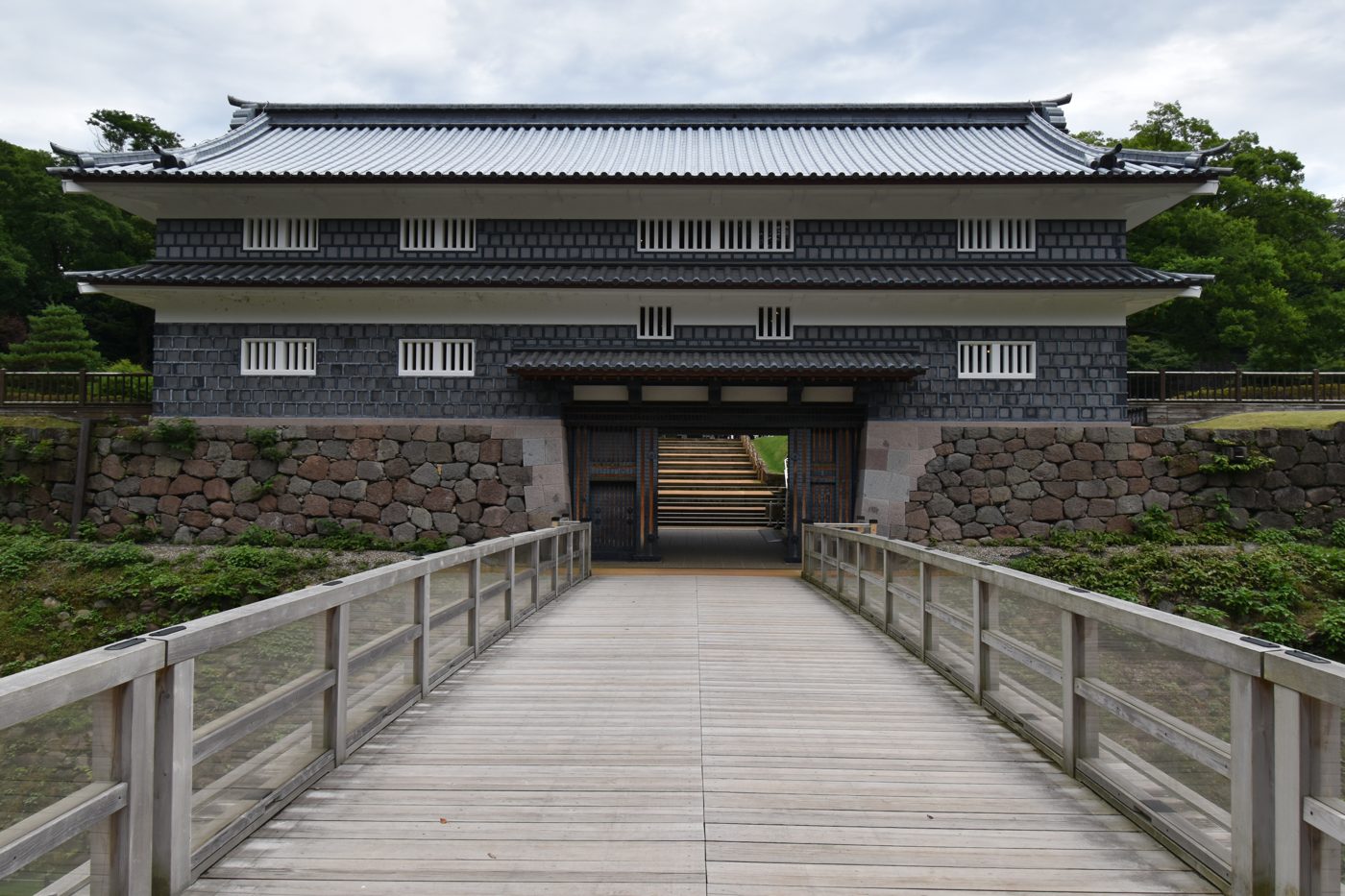
And in front of it is the thing worth crossing the park for.
Nezumitamon Gate is built of wood. The bridge in front of it is a steel rigid-frame structure with timber cladding, opened the same month, and the castle says so itself, and says why: it had to meet modern safety standards.
Figure 4
Stand on it for a moment. That one bridge explains how this whole hill has been rebuilt more plainly than any of the timber halls do. Everything that could be done the old way was done the old way, down to sourcing three-quarters of a gate’s timber locally. The one thing that couldn’t — a public bridge with a crowd on it — was done the new way, and then dressed in wood so it wouldn’t make a scene about it.
Half four, six, and nine
The buildings that charge admission stop letting people in at 16:00 and close at 16:30. So does the tea room.
The park doesn’t. It stays open until 18:00 from March to mid-October, until 17:00 through the winter, and it’s still free.
Then there are the evenings. The castle opens until 21:00 on certain nights, free — and here the two versions of the official site contradict each other. The Japanese page says every Saturday plus peak seasons such as cherry blossom. The English page says Sundays. We can’t tell you which is right; check the current schedule before you build an evening around it. The outer stone walls are lit every night until 22:00 regardless, and you don’t need to be inside for those.
Which gate to leave by
Five entrances, and the one you pick decides what happens next.
| Exit | Nearest stop | Walk |
|---|---|---|
| Ishikawa-mon | Kenrokuen-shita / Kanazawa-jo | 5 min |
| Gyokusen’inmaru | Hirosaka / 21st Century Museum | 5 min |
| Ote-mon | Owaricho | 5 min |
| Kuromon | Musashigatsuji / Omicho Market | 7 min |
| Nezumitamon | Minamicho / Oyama Jinja | 5 min |
Circle the Kuromon line. Omicho Market is seven minutes from a castle exit, which means the castle and lunch are the same outing — and if you start early enough, breakfast too: four of its restaurants open at seven. Taxi back to Kanazawa Station is about ten minutes from anywhere here.
Costs, in full
Figure 5
| Price | |
|---|---|
| Park, all areas, all hours | Free |
| Kahoku-mon, Nezumitamon interiors | Free |
| Tsuru-no-maru rest house and VR film | Free |
| English volunteer guide | Free |
| Hishi-yagura / Gojikken Nagaya / Hashizumemon — adult | ¥320 |
| — child, 6 to under 18 | ¥100 |
| Combined ticket with Kenrokuen | ¥500 |
| Matcha at Gyokusen-an | ¥1,000 |
If Kenrokuen is also on your list, the ¥500 combined ticket is the obvious buy, and you can get it at whichever you reach first.
One note for anyone working from the English pages only: the Japanese-language fee page also lists exemptions for visitors with disabilities and a carer, for school groups, and for residents of welfare facilities. The English page lists only the over-65 exemption. If one of those applies to you, ask at the window.
Where I stand
Give it two hours, not one.
The park’s own suggested route runs sixty minutes, and the map shows it turning back before the Honmaru — which means it leaves out Sanjikken Nagaya, one of only three buildings on this hill that came through the Edo period. Twenty minutes more buys the third survivor.
If something has to go instead, I would drop the ticketed turrets before I dropped that walk. Hishi-yagura and the Gojikken Nagaya are the most photographed things in the park and they are twenty-five years old; Sanjikken Nagaya was standing when the shogunate ended. The ¥320 is not the question. The order is.
And take the early hour seriously — 4:00 in summer, 5:00 in spring and autumn. Not for the light, but because the park charges nothing at any hour while everything that charges opens at nine. Walk the free hill first, work out what you actually want to see inside, then buy the ticket.
And if you’re doing Kenrokuen too
Both, in one morning, is easily done — they share a bus stop and the walk between them is a few minutes.
The order decides itself once you look at the clock. The castle lets you in at four in the morning in summer and charges nothing; Kenrokuen keeps its own hours and sells its own tickets. So: castle first, while nothing is open and nothing is charged. Cross when the garden opens. And by nine, when the castle’s doors unlock, you’ll know exactly which buildings you want to pay to go inside.
1788, 1858, 2033. A gate that came through the fires, a storehouse that was standing when the shogunate ended, and a palace whose foundations are being tied together under a temporary roof this month.
If a surviving keep is what you came for, this hill does not have one and is not going to. What it has is four centuries of decisions about what to rebuild and what to leave empty — the most recent of them handed to carpenters from a peninsula that shook in 2024.
Come before nine, while all of it is free, and decide in daylight which parts you want to pay to walk inside.
Sources and images
- Ishikawa Prefecture, official Kanazawa Castle Park site — the fires and reconstruction dates, the three layers, the Ninomaru Palace project, routes, opening hours, admission, and the Nezumitamon bridge. Checked 13 September 2026. English and Japanese pages differ on the free evening opening schedule and on published fee exemptions; both readings are given in the text.
- Photographs: the Sannomaru plaza row and Kahoku-mon by Zairon (CC BY-SA 4.0, Wikimedia Commons); Ishikawa-mon’s masugata by 663highland (CC BY-SA 3.0, Wikimedia Commons); the Tsurumaru Warehouse by 国鉄583系~commonswiki (CC BY-SA 3.0, Wikimedia Commons); Sanjikken Nagaya by 上条城 (public domain, Wikimedia Commons); Nezumitamon and its bridge by Fred Cherrygarden (CC BY-SA 4.0, Wikimedia Commons); Gyokusen’inmaru Garden by Abasaa (public domain, Wikimedia Commons).
- Diagrams drawn by us from the figures published by Ishikawa Prefecture.