Tokyo / Guide
Toyosu: The Fish Market and the Town It Moved Into
Toyosu Market豊洲市場
The Toyosu I knew first was a town of glass towers and a busy shopping mall by the water. The fish market came after them, and the visitors came after the market. You can come to Toyosu for the tuna auction and go straight back to the train, but I would not. Give the town an hour as well, because the market makes more sense once you see what it moved into.
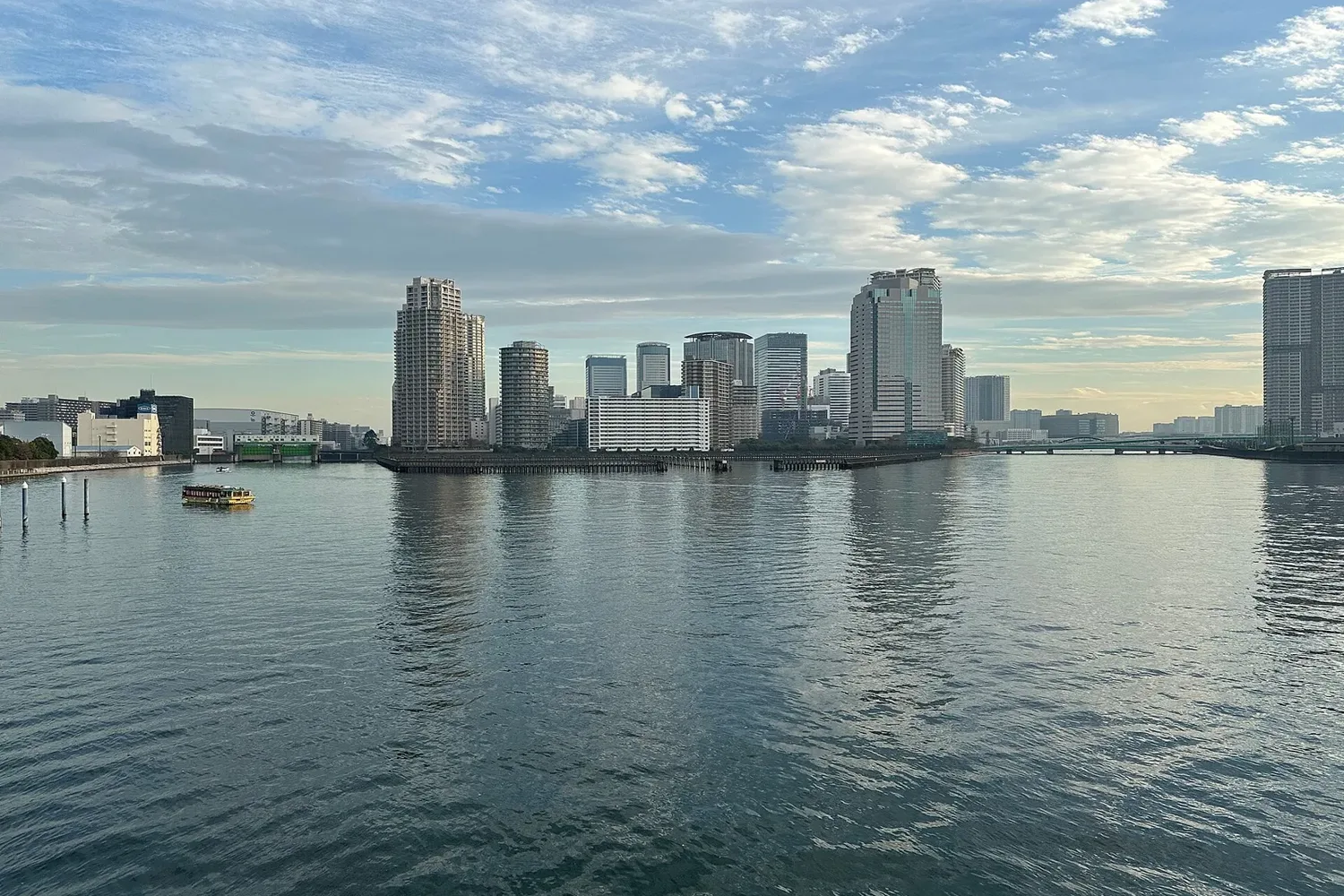
Toyosu is land made from the sea. Koto City says the name was given in 1937 and is said to express a hope that the reclaimed land would become an “abundant shoal”. Before the towers, it was a place for building ships, and beside the mall a park still keeps a dock to remember the shipyard by.
Buyers who bid without a word
If the market is open on the day you come, go up to the second-floor visitor walkway of the fisheries wholesale building and watch the tuna auction floor from there. There is no limit on numbers there, and it opens early on market days. If you want to be closer, the Tokyo Metropolitan Government runs a free tuna-auction viewing deck by advance lottery; even if you are not drawn, the walkway is still yours.
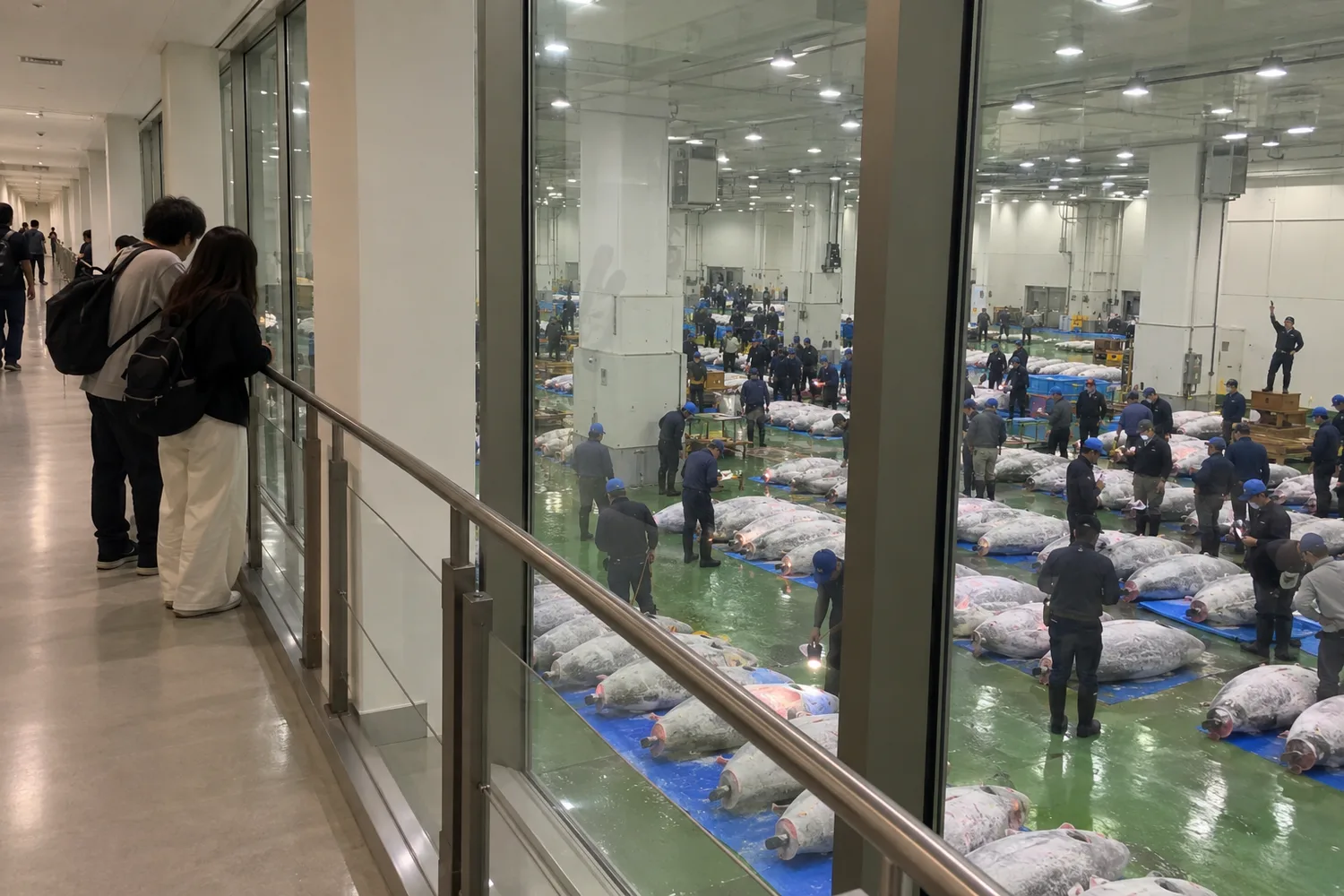
Watch the hands. In the Tokyo Metropolitan Government’s glossary of market terms, the only person who raises their voice at an auction is the auctioneer. The buyers say nothing. They show their price with their fingers, a sign called teyari, and the auctioneer reads the hands and names the highest. Picture buyers bidding on whole tuna without a word while the auctioneer calls out. That is what I would get up for.
The intermediate wholesalers sell to the trade, so ordinary visitors cannot shop on that floor. For shopping, head upstairs to Uogashi Yokocho.
Where the cooks shop, and where you can too
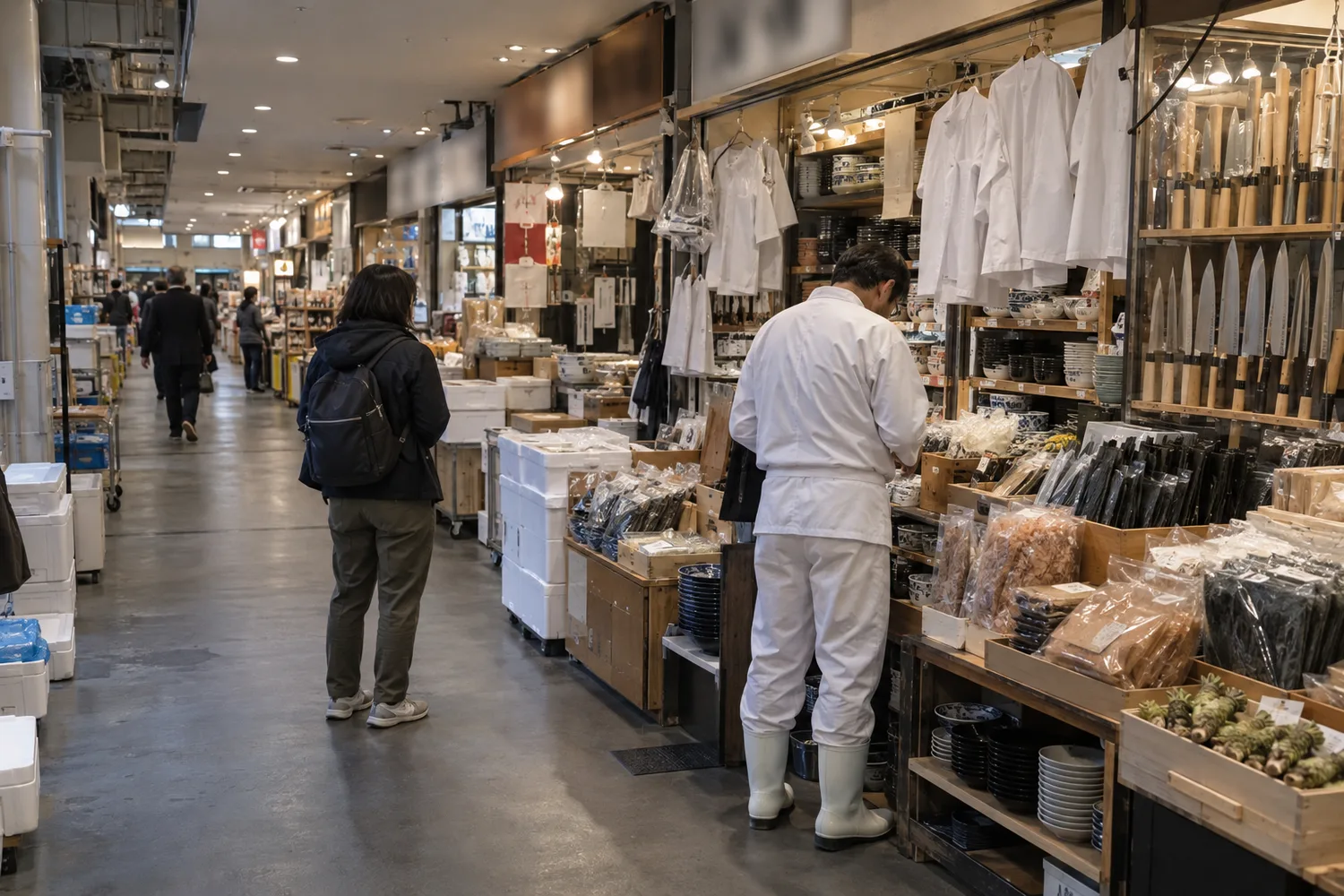
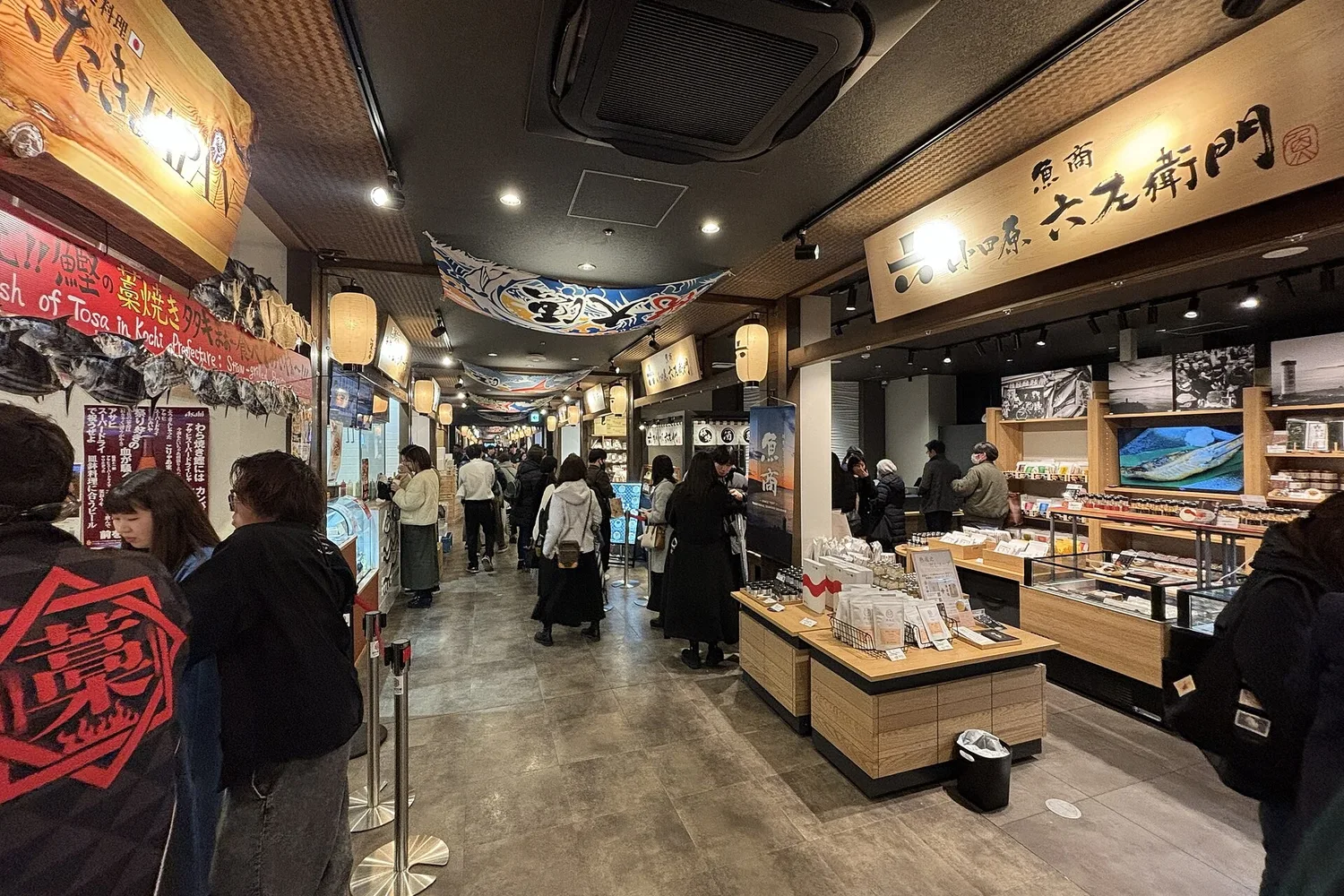
Upstairs in the intermediate wholesale building, Uogashi Yokocho is the part of the market where you can shop. Its own description is “a town of ingredients”: about 70 specialist shops selling what cooks buy, from fresh wasabi and shiso buds to kelp, bonito flakes, pickles and tamagoyaki, and on to knives, containers, white coats and rubber boots. If you have walked the Tsukiji Outer Market, this will feel familiar, only indoors.
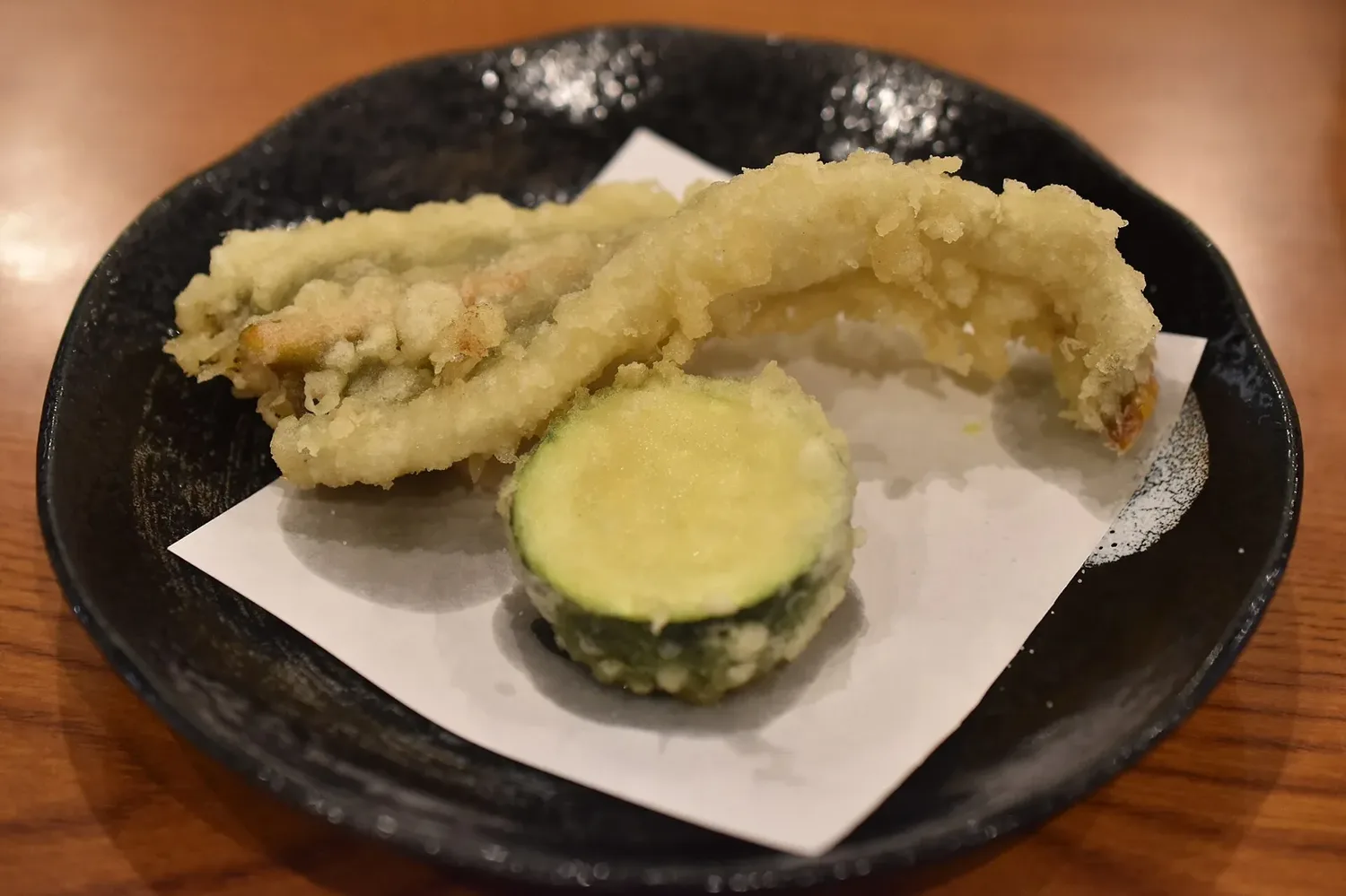
The shops open early and most close around midday, so this is a morning floor. Payment is mainly in cash, prices are fixed, and you cannot eat in the shop lanes or corridors. There are restaurants on the third floors of the intermediate wholesale building and the management building, and they keep their own hours.
The dock beside the mall

Now walk away from the fish, to the water by Toyosu Station. Harumibashi Park was laid out together with the tower blocks and the Urban Dock LaLaport Toyosu mall, and it keeps a dock, an anchor and cranes in memory of the Ishikawajima-Harima shipyard that once stood here.
The shipyard survives in the mall’s name, Urban Dock, and in the dock beside it. Even on weekdays the mall and the park are busy with families, and at weekends the waterfront is loud with children playing where ships were once built.
Walk the water’s edge

Toyosu Gururi Park runs right round the market along the water, a 4.5-kilometre path for walking, running and fishing. From its tip, Koto City says, you can take in Rainbow Bridge and more.
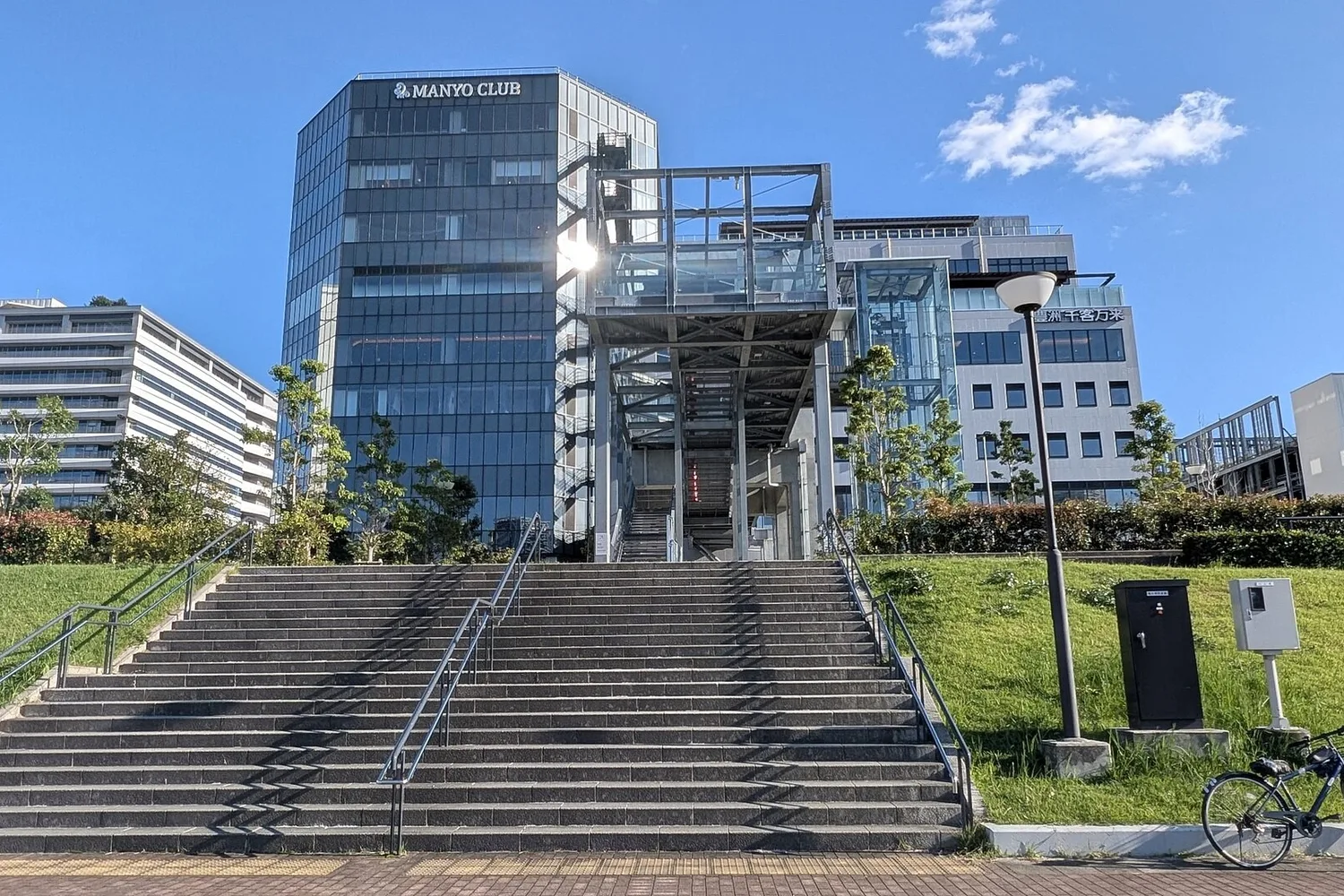
You can also go above street level for free. The market’s rooftop garden is open from early morning until late at night, and the Tokyo Metropolitan Government says it stays open even on days the market is closed; the market’s leaflet notes that you can walk up to it from Toyosu Gururi Park. Next door, Toyosu Senkyaku Banrai has a footbath garden on its eighth floor that anyone can use for free, with what the complex calls a panoramic view of Toyosu.
An afternoon the way Toyosu spends it
If you have the afternoon after the market, do what people here do with theirs: shop at LaLaport, or have a barbecue by the water. The beach-style barbecue ground by the market closes for the season at the start of November and plans to reopen at a new site in front of Shin-Toyosu Station; if it is closed when you come, make it LaLaport. The details are in the table below.
If the market is closed
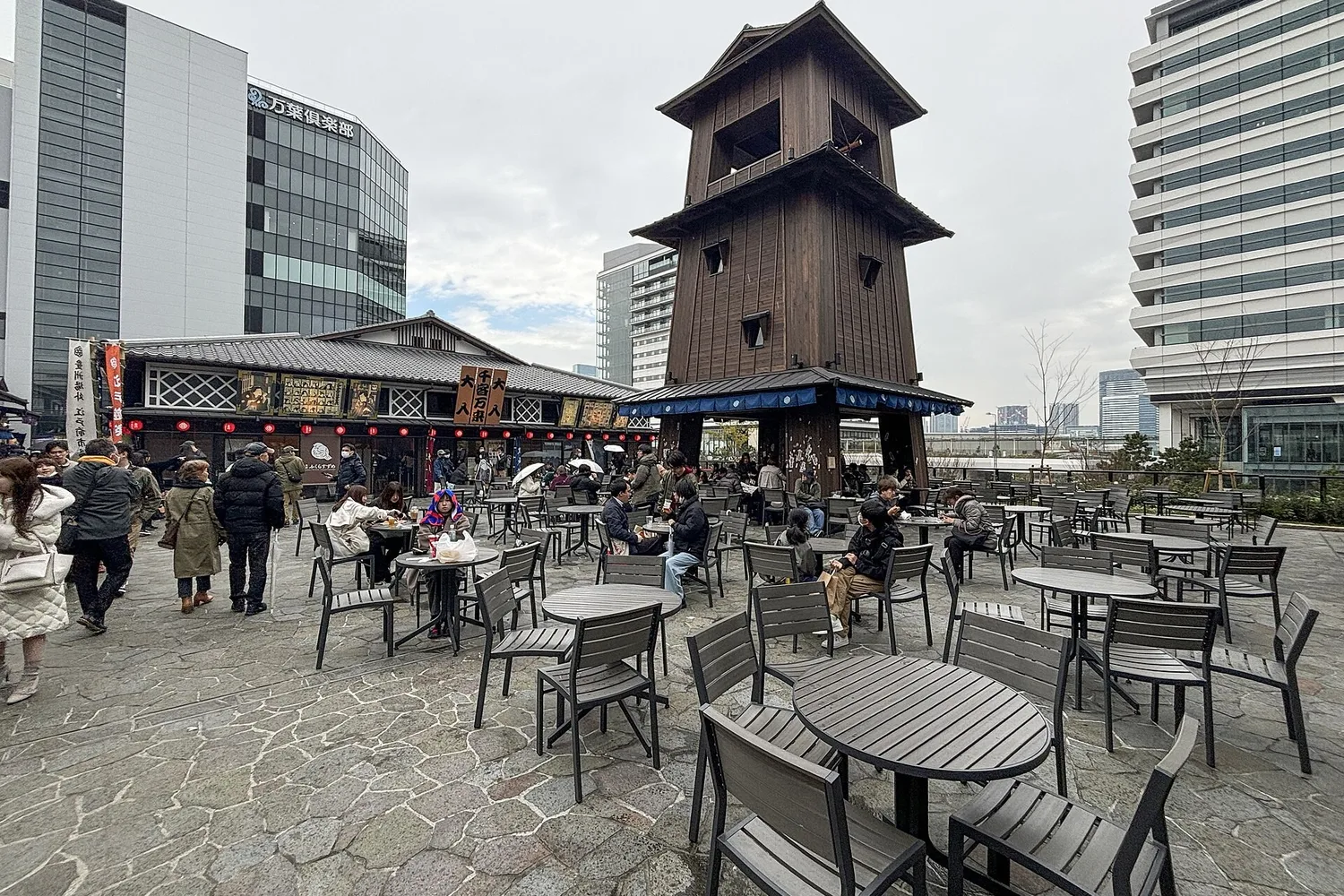
On Sundays, public holidays and other market holidays, you cannot go into the market at all, restaurants and shops included. That does not have to cancel the trip. I would spend that day on the outside: the rooftop garden, the dock in Harumibashi Park, a stretch of the waterside path, and Senkyaku Banrai, which says it has no closing days and stays open when the market is shut. Check the market calendar before you set an alarm for five.
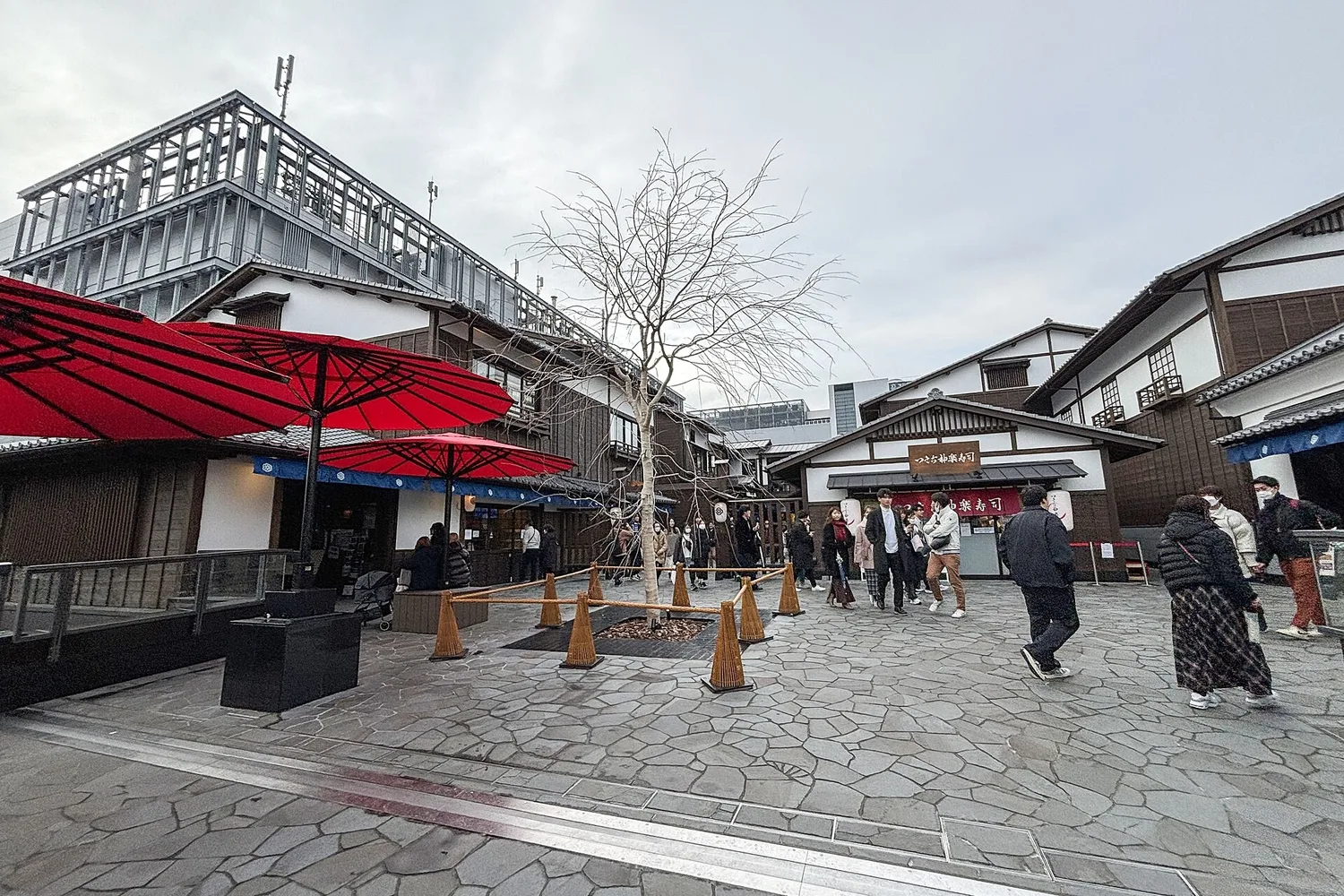
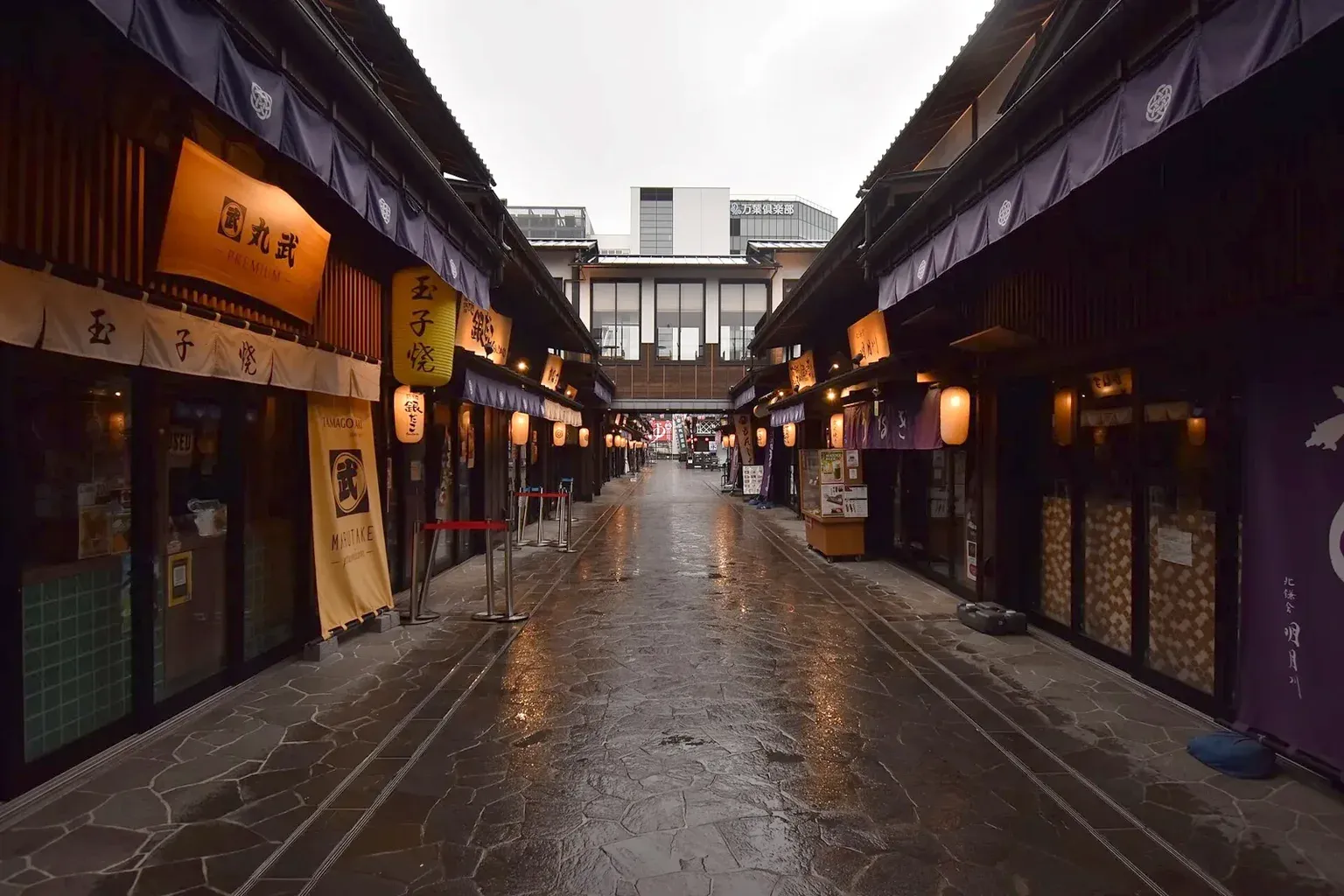
Senkyaku Banrai describes itself as a recreation of an Edo-period neighbourhood that sells fresh food from the market next door. So even when the market’s own doors are shut, you can still eat food from it here, under lanterns and wooden eaves that are new but built to look old.
One district over
What still surprises me about Toyosu is how quickly the city changes around it. Cross the water to Tsukishima and you are suddenly in a much older Tokyo, with the feel of Edo in its streets. Kachidoki, next to it, feels to me like the first stretch of Ginza, which is only a little further on.
Before you go
| Toyosu Market (visitor areas) | Visitor walkway, including the restaurant and shop areas: 5:00–17:00 on market days; the tuna auction can be watched from the second-floor walkway from 5:00. Rooftop garden: 5:00–23:00, open even on market holidays. On Sundays, public holidays and other market holidays the market, including its restaurants and shops, cannot be entered. Enter from the pedestrian deck (one entrance for each building). No eating or drinking in the walkways, benches included. Ordinary visitors cannot buy at the intermediate wholesale floor. No visitor parking; use public transport. Official page: shijou.metro.tokyo.lg.jp / market calendar |
| Tuna auction viewing deck | Free, by advance application and lottery (up to 5 people per application, 100 people a day); not first come, first served. For November 2026, the viewing time is 5:45–6:25, meeting at 5:30 at the PR Corner (Management Facilities Building, 3F). Applications for December 2026 open 4 November and close 10 November (Japan time). Photo ID is checked for everyone. If you are not drawn, you can watch from the second-floor walkway. Official page: shijou.metro.tokyo.lg.jp |
| Uogashi Yokocho (shops) | About 70 specialist shops on the 4th floor of the Fisheries Intermediate Wholesale Market Building; open from early morning until around midday. Mainly cash; fixed prices; no eating in the lanes. Address: 6-5-1 Toyosu, Koto City, Tokyo (東京都江東区豊洲6-5-1). Official website: uogashiyokocho.or.jp |
| Toyosu Senkyaku Banrai | No closing days, including market holidays. The 8th-floor footbath garden is free; only the hot-spring building charges admission. 4 minutes’ walk from Shijo-mae Station (Yurikamome). Address: 6-5-1 Toyosu, Koto City, Tokyo (東京都江東区豊洲6-5-1). Official website: toyosu-senkyakubanrai.jp |
| Harumibashi Park | The dock and monuments recalling the old shipyard; next to Urban Dock LaLaport Toyosu. Nearest station: Toyosu (Tokyo Metro Yurakucho Line, Yurikamome). Koto City tourism page: koto-kanko.jp |
| THE BBQ BEACH in TOYOSU | A beach-style barbecue ground facing Rainbow Bridge, at 6-5-27 Toyosu, Koto City, Tokyo (東京都江東区豊洲6-5-27). Its booking page says this site’s season ends on 3 November 2026 and that it will reopen in a new form in front of Shin-Toyosu Station in early summer 2027. Booking page: digiq.jp |
| Toyosu Gururi Park | A 4.5 km waterside path around the market. Park centre: 2-3-6 Toyosu, Koto City, Tokyo (東京都江東区豊洲2-3-6). Official page: city.koto.lg.jp |
| Getting there | Shijo-mae Station on the Yurikamome line, linked to the market by the pedestrian deck. |
What I would do
At Toyosu, I would watch the auction from the walkway and look for the buyers’ finger signs, then walk to the dock beside the mall, and see the market as a later arrival on reclaimed land where ships were once built.
We know Toyosu’s streets first-hand; we have walked past the market but have not toured its visitor areas for this guide. The practical information was checked against the official sources below on 28 October 2026.
- Tokyo Metropolitan Central Wholesale Market (Japanese and English) — visiting hours, the rooftop garden, market holidays, the tuna auction viewing deck, the buildings, and the explanation of market words and vehicles: shijou.metro.tokyo.lg.jp
- Uogashi Yokocho (Japanese) — the shops and the visitor guide: uogashiyokocho.or.jp
- Toyosu Senkyaku Banrai (Japanese and English) — opening days, the footbath garden and how the complex describes itself: toyosu-senkyakubanrai.jp
- Mitsui Fudosan (Japanese) — the opening of Urban Dock LaLaport Toyosu in October 2006: mitsuifudosan.co.jp
- Koto City and the Koto City Tourism Association (Japanese) — the origin of the name Toyosu, Toyosu Gururi Park, and Harumibashi Park and the shipyard dock: city.koto.lg.jp, koto-kanko.jp
- THE BBQ BEACH in TOYOSU (Japanese) — the booking page with its location and season: digiq.jp
- Photographs: Toyosu from Aioi Bridge by Fukumoto (CC BY 4.0, cropped); Harumibashi Park, the view toward Harumi and Senkyaku Banrai from Toyosu Gururi Park by Souka Kinmei (CC BY 4.0); the bell-tower plaza, Edomae Plaza and the food lanes of Senkyaku Banrai by Fotointheworld (CC BY 4.0, cropped); tempura at Tenfusa and the Edo-style street in Senkyaku Banrai (the lead image) by Fred Cherrygarden (CC BY-SA 4.0, cropped); all via Wikimedia Commons. The pictures of the auction walkway and the shop lane are AI-generated photo illustrations, not photographs of Toyosu Market.
More in Tokyo
- Shibuya Crossing and Shibuya Sky — For the crossing seen from an open roof, with little more than your phone in your pocket
- Senso-ji and Asakusa — For the dragon carved under the Kaminarimon lantern, and the lit grounds after five
- Harajuku and Meiji Shrine — For a forest planted with broad-leaved trees instead of cedar, then a crepe on Takeshita Street
- Tokyo Skytree and Tokyo Tower — For one tower to look out from and one to look at, up its outdoor stairs
- Akihabara — For starting in Radio Kaikan, where figures share the building with vacuum tubes
- Where to Stay — For choosing where to sleep by what you want to see after dinner and before breakfast
Explore other areas
- Hokkaido — Sapporo
- Kanto — Hakone, Tokyo · You are here
- Hokuriku — Kanazawa
- Koshin-Tokai — Fuji Five Lakes
- Kansai — Nara
- Chugoku — Hiroshima
- Kyushu — Fukuoka
- Okinawa — Naha
