Tokyo / Guide
Tsukiji Outer Market: Start With the Omelette, Not the Tuna
Tsukiji Outer Market築地場外市場
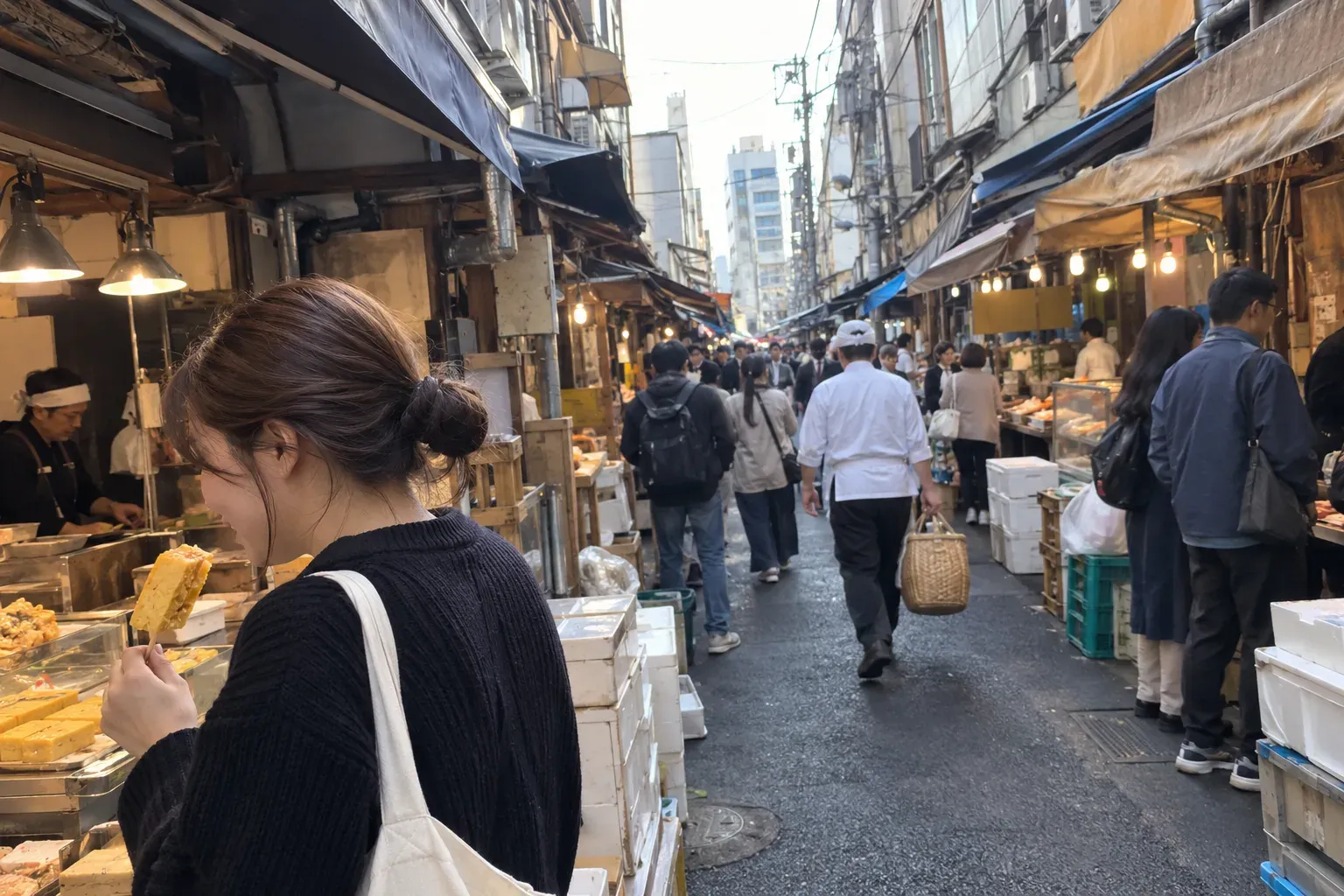
Before I can see the market, I can smell it: the cooking from diners that have been here for decades reaches me as I get close. Most people come to Tsukiji for tuna. Start with the omelette instead. The thick, golden blocks stacked behind the glass at the egg shops were not made as a snack for visitors. The market itself says they began as a sushi topping, sold to the sushi chefs who came here to buy their fish, and that is how the omelette shops multiplied. The slice you buy as a snack began as something made for a sushi counter.
The omelette is seasoned for rice
If you only have room for one bite before the seafood, I would make it a slice of tamagoyaki, eaten in front of the shop that made it. Picture it cut from a block as thick as a paperback. After that, go and find your fish.
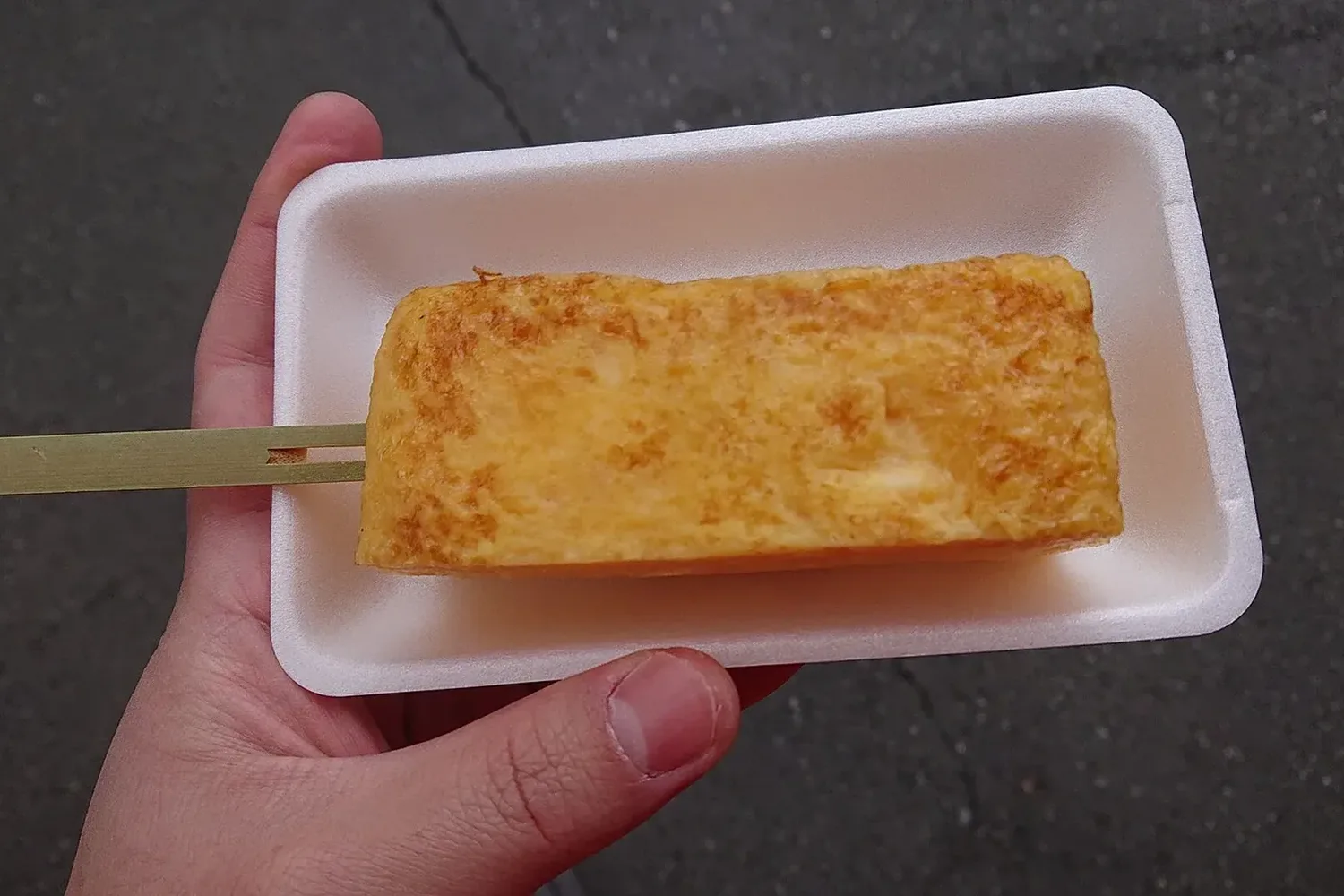
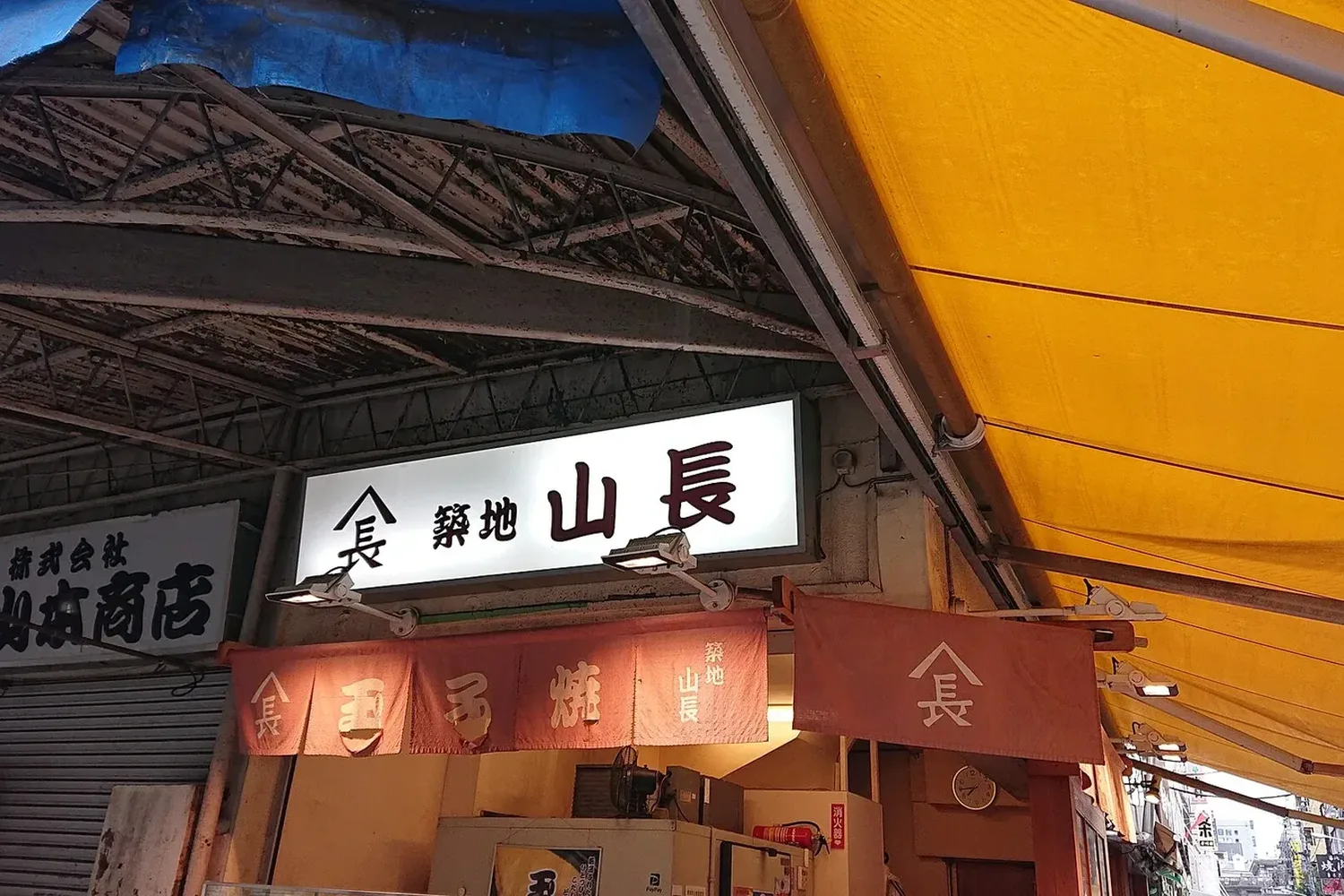
Tsukiji Yamacho is the clearest case. The shop says it supplied only sushi bars and restaurants from the start, and opened a counter to the public later because ordinary customers kept asking. The flavour, it says, is made to suit vinegared rice. Marutake, listed at the same address, has done nothing but tamagoyaki since it opened, its cooks starting on the day’s batch at three in the morning.
Tsukiji Shoro began as a sushi bar, and its owner puts it simply: the omelette goes perfectly with sushi rice.
Then go and find your fish
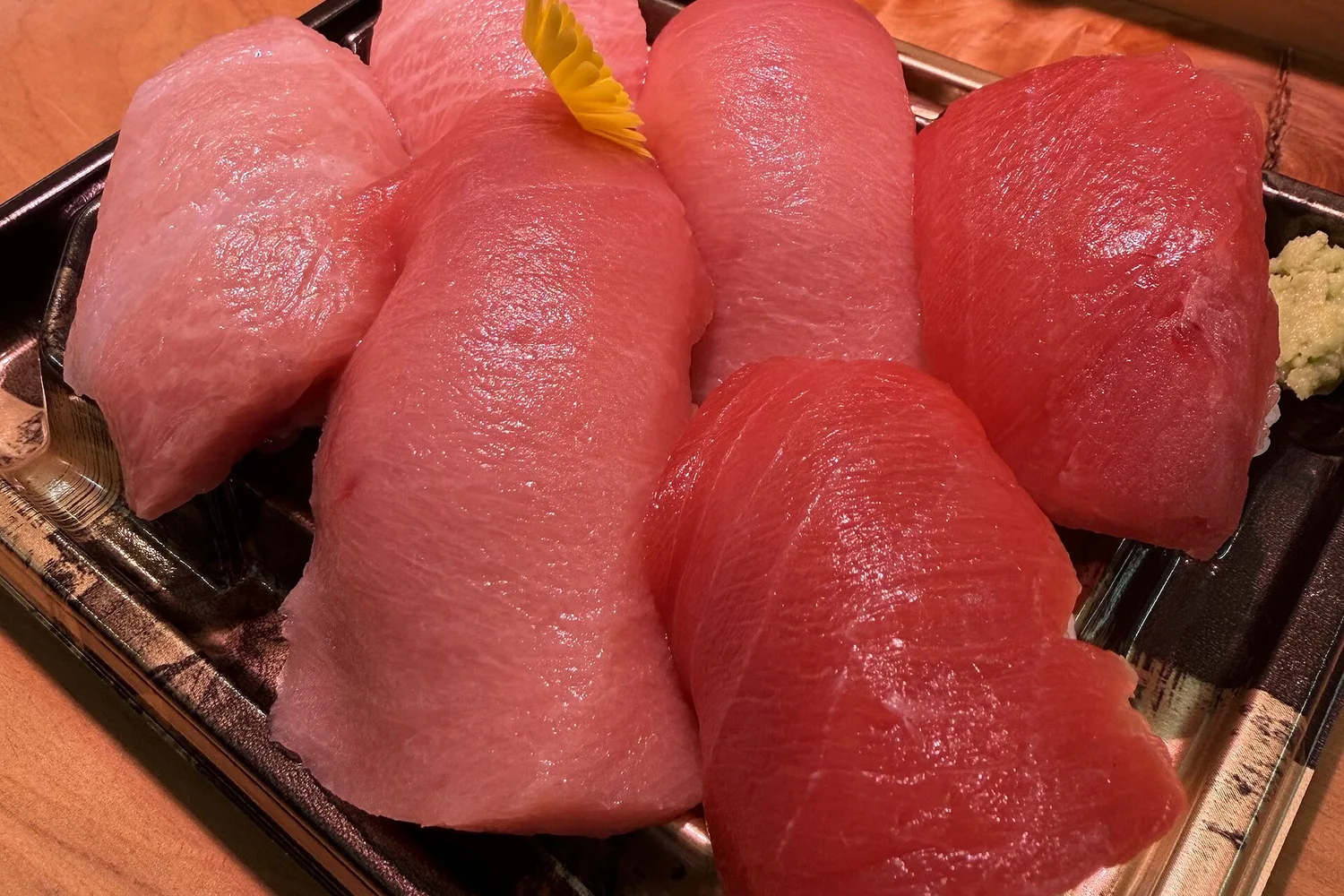
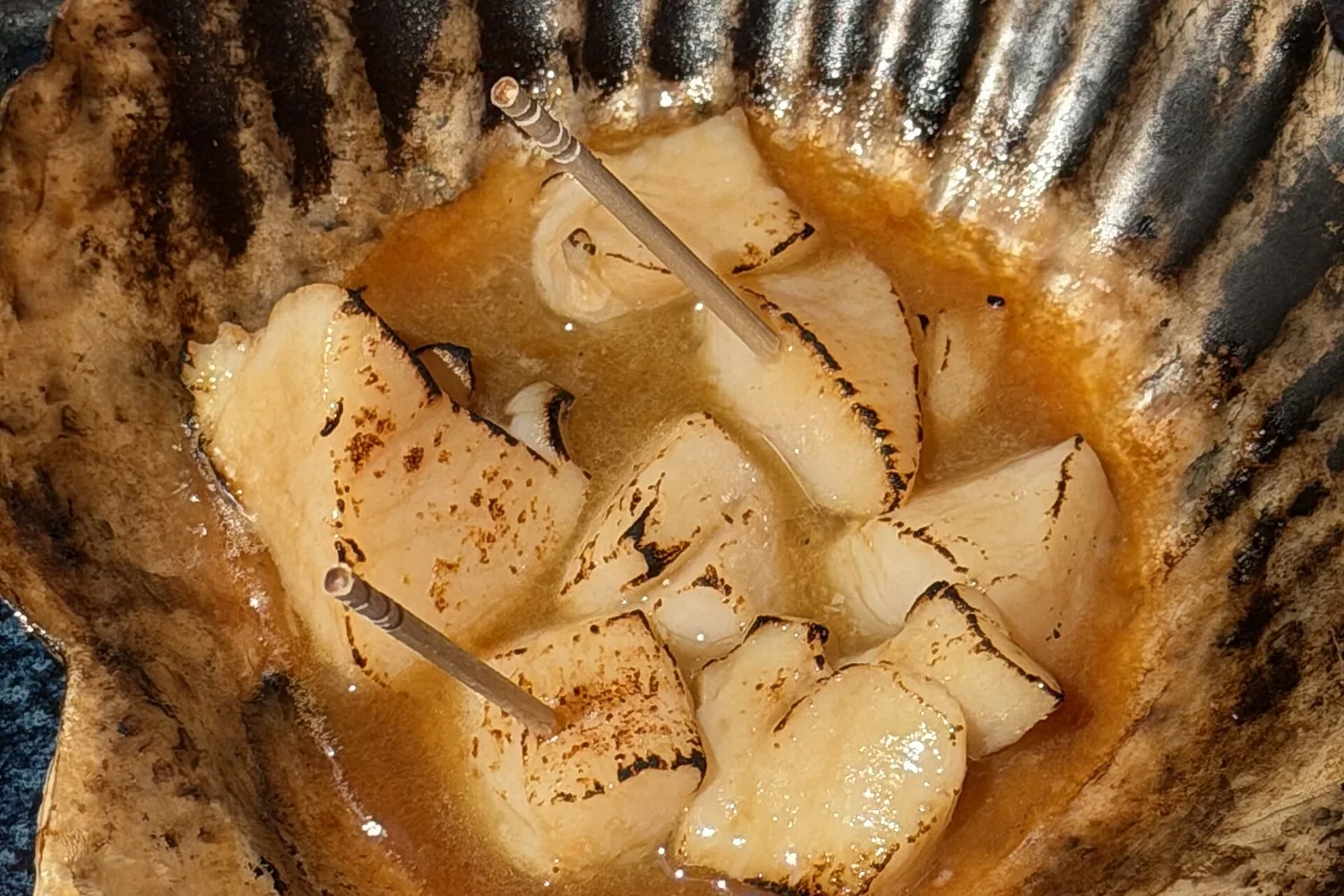
Some of the fish counters here have one foot in the wholesale trade. Tsukiji Sushitomi is run by Suzutomi, a wholesaler at Toyosu Market that deals in wild tuna, and it opened in the outer market so that people could enjoy wild fish without ceremony. If you want sushi at a counter, I would go there first, for tuna chosen by people who sell tuna for a living.
If you want a bowl, Maguro-don Segawa serves bluefin tuna marinated in the shop’s own soy sauce and laid over rice. The shop says it chooses everything else with the same care, down to the rice, the tea, the nori and the overnight pickles. It is a morning place that closes in the early afternoon and rests on Sundays, so put it near the start of your day.
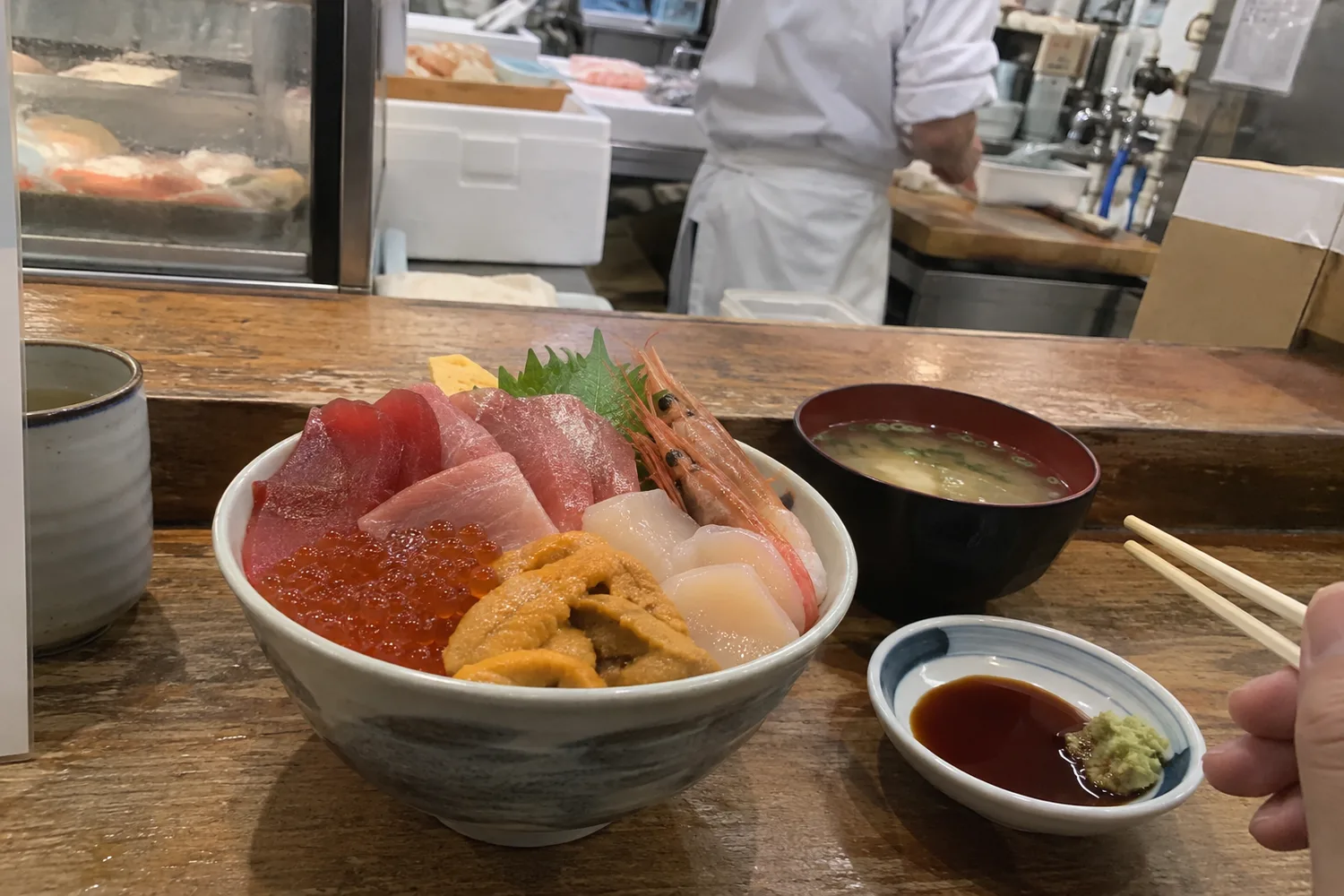
If sea urchin is the reason you came, Unitora calls itself the only uni restaurant in the outer market. It buys uni from regions where it is good at that time of year, and its bowls let you taste several kinds side by side.
And if a menu of bowls leaves you stuck, the market’s own advice is the simplest: ask the shop what it recommends, because every counter has a topping it is proud of.
Watch for the bamboo baskets
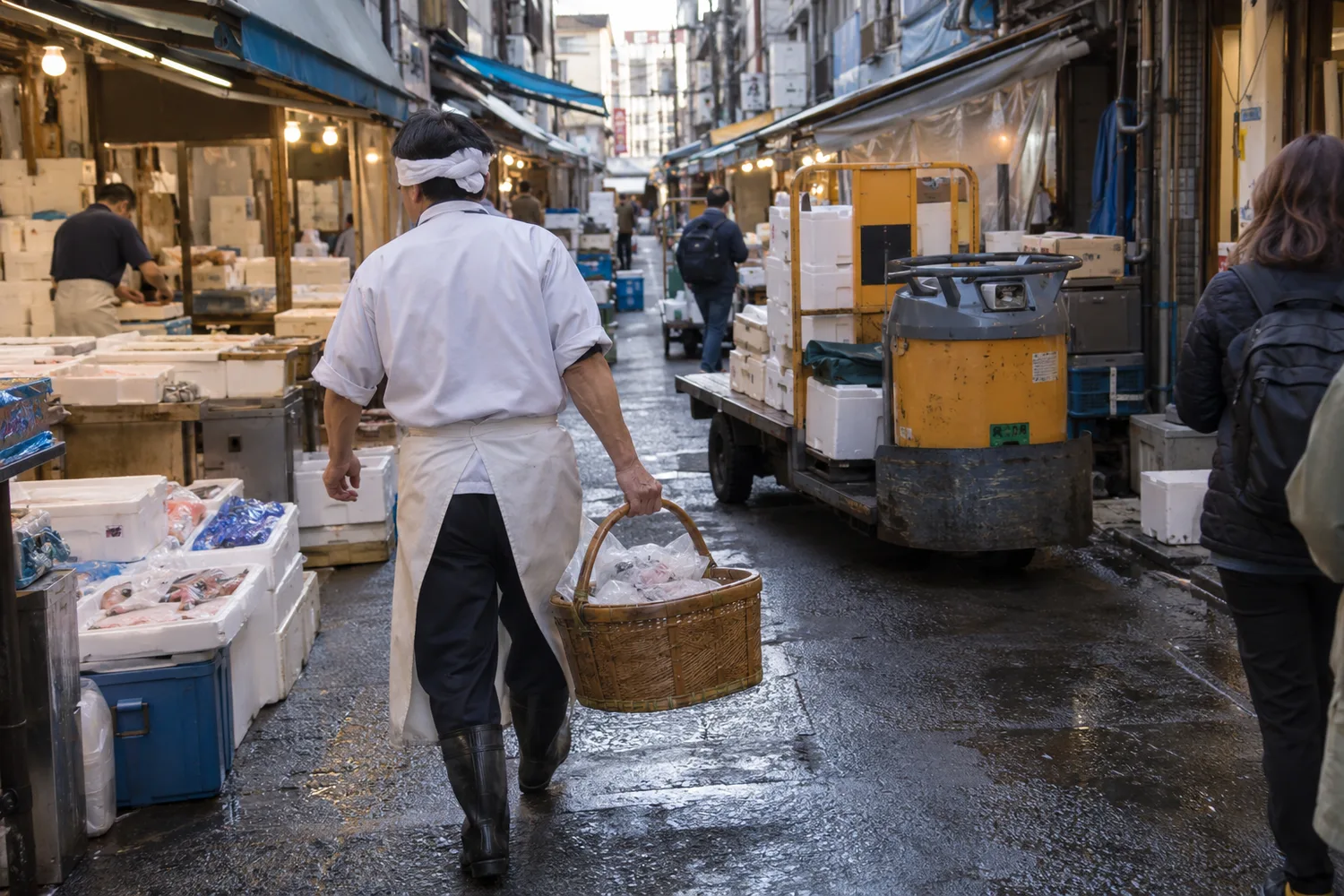
Some of the people moving quickly through the lanes carry baskets of woven bamboo. The market explains them as baskets for the raw food just bought: with ice inside, the water drains away and the contents do not turn clammy. Before plastic and paper bags, nearly everyone shopped this way, and for working chefs they are still an essential tool.
When you see one coming, you are looking at a buyer, and the market asks visitors to give buyers priority until nine and not to get in their way. If you arrive early, walk the lanes and look, but let the baskets go first; the hours the market recommends for sightseeing are in the table below.
Eat where you buy. The market asks people to eat inside the shop or right in front of it, not while walking, because it gets in the way of everyone else in the narrow lanes.
The diners that lose track of the hour
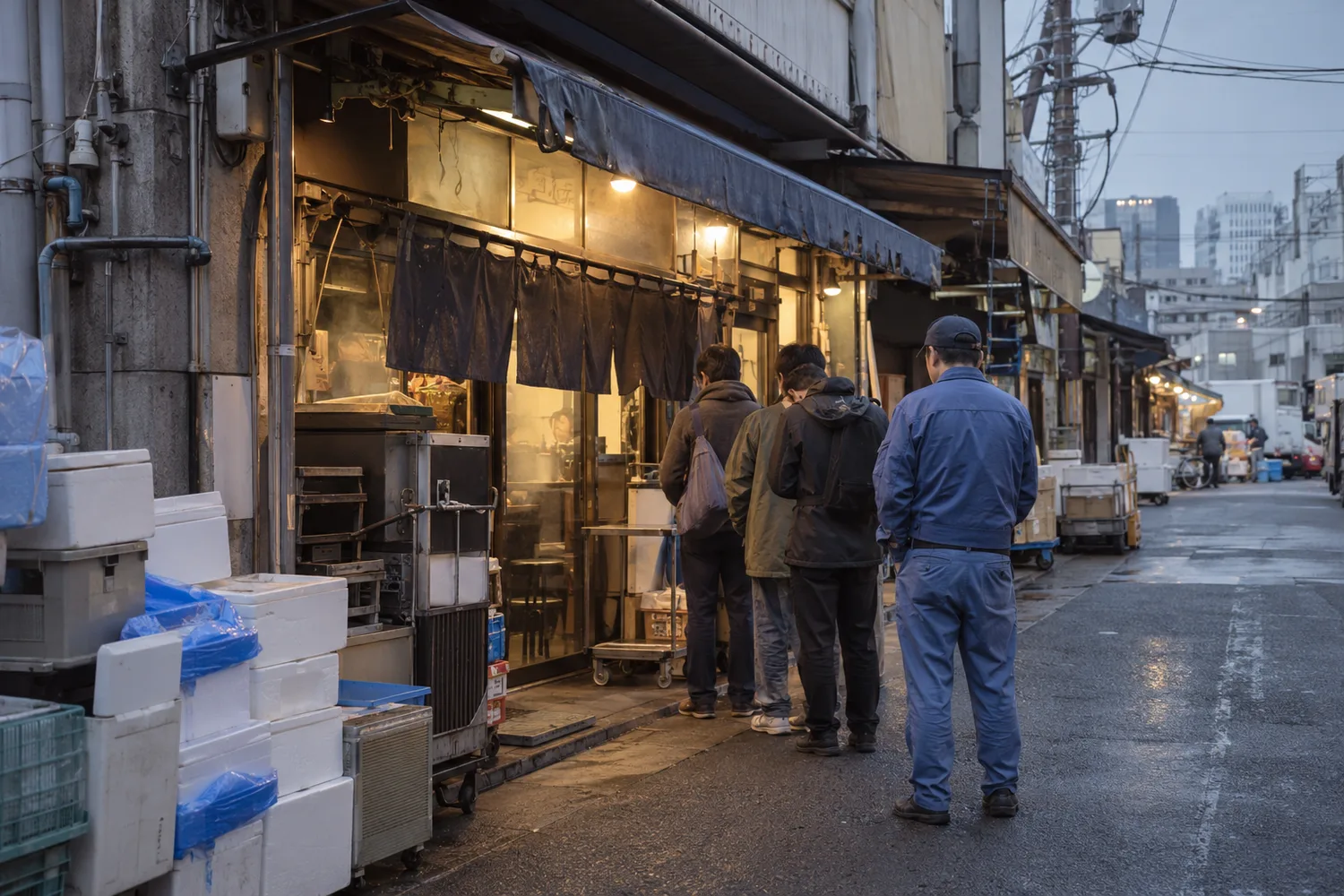
The market’s old diners open early for the buyers and the people who work here, and that is where the smell comes from. Soba, ramen, ginger pork, fried prawns, eel: each counter tends to do one thing. What I remember most is who is waiting. Drivers coming off a night shift stand in line with the regulars, in a neighbourhood that has been busy since early morning. For some of them this is breakfast; for the drivers it is the end of the working day. In that line, I lose track of what time it is.
The shops the chefs come for
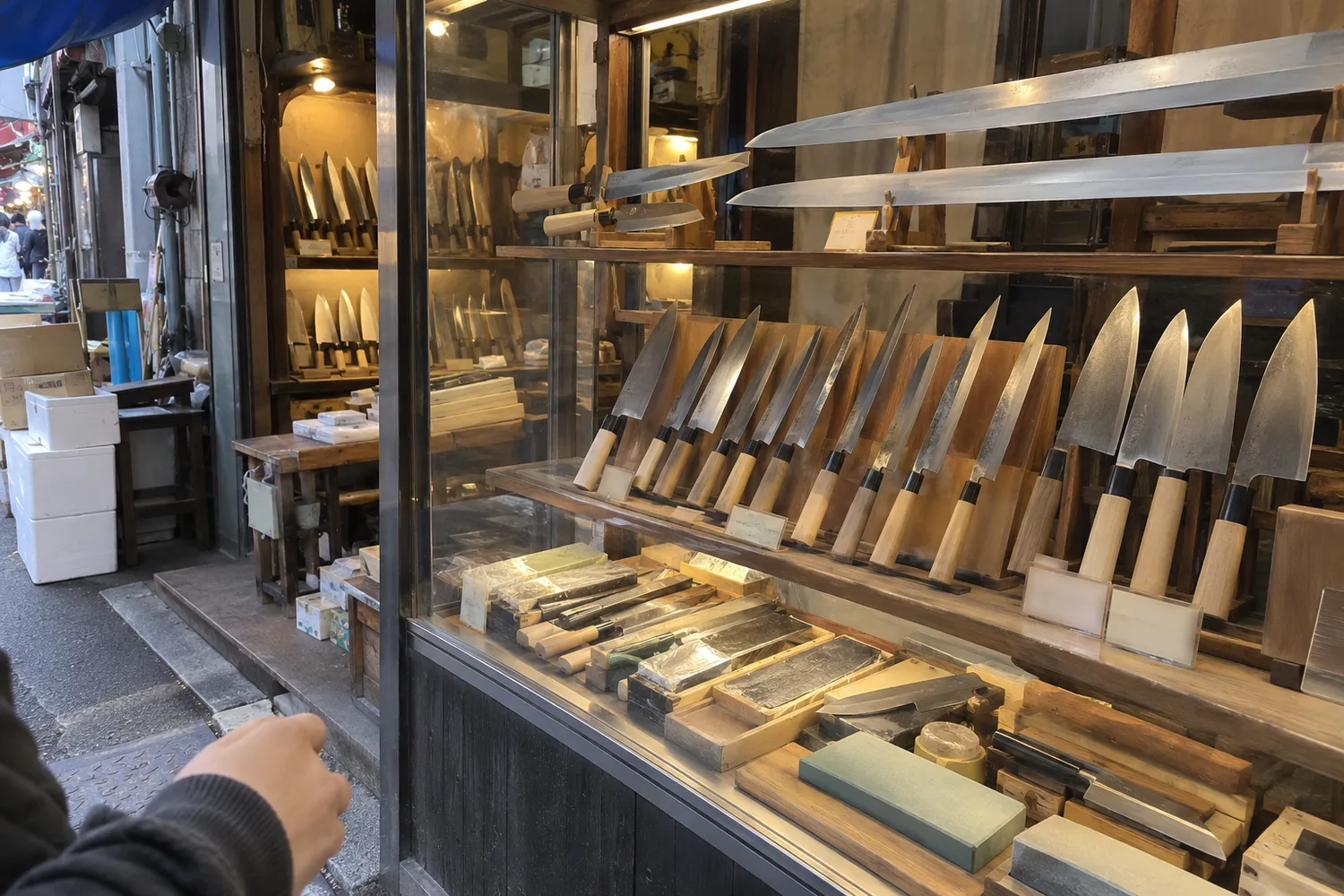
Walk past the food for a minute and you find the tools. Azuma Minamoto no Masahisa calls itself the shop where the tuna knife was born, and sells the long blades used to break down a whole tuna alongside knives for home cooks. At Tsukiji Aritsugu, the shop invites you to pick up the hand-forged knives and look at them, and offers to teach you to sharpen your own. These counters are worth a stop even if you have only come to eat.
The stock shops are close by too: bonito flakes shaved that morning, kelp and dried sardines, stocked with professional cooks in mind.
The egg mound at Namiyoke Shrine
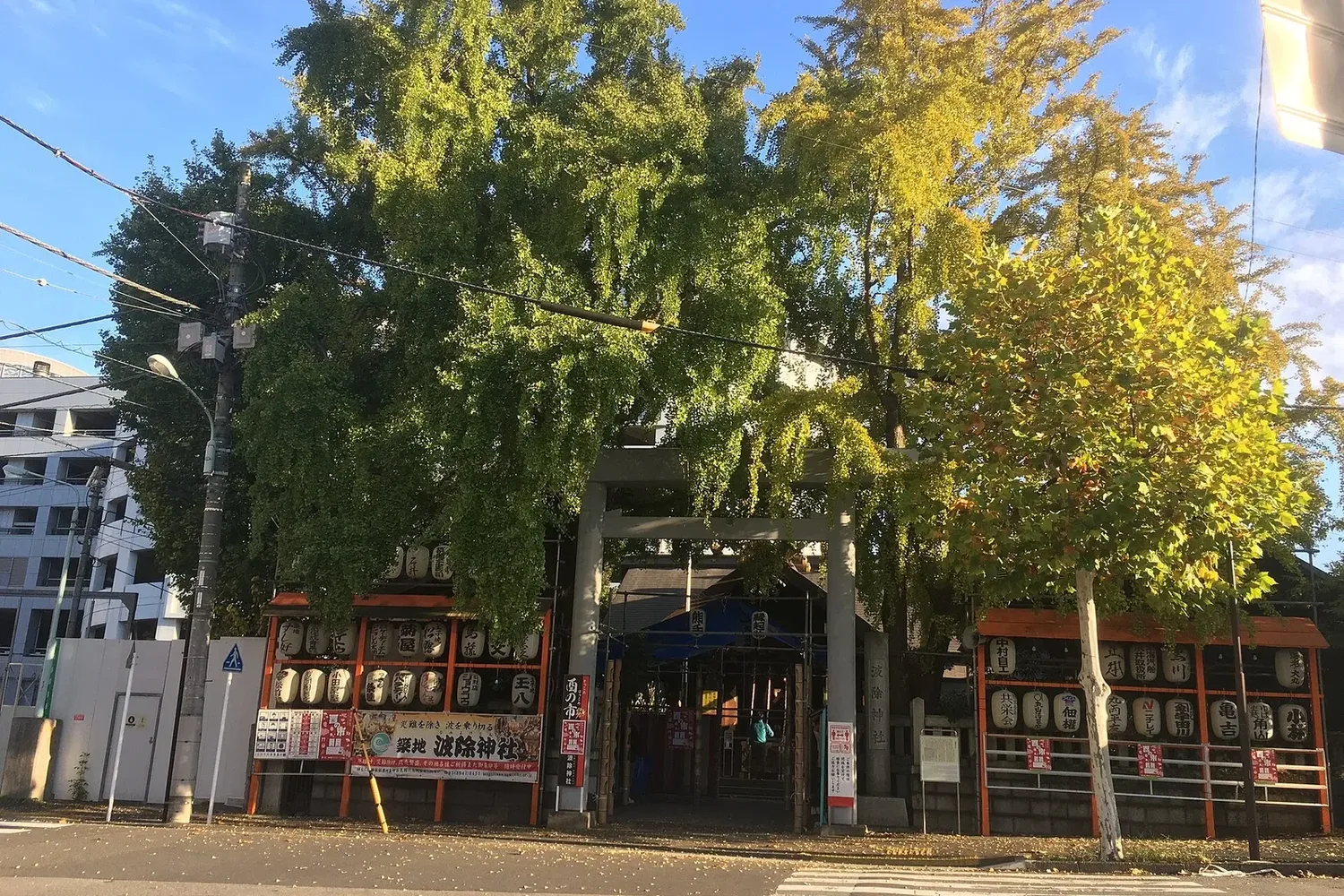
Namiyoke Inari Shrine sits at the back corner of the market. Its name means protection from the waves. The shrine’s history says an image of Inari was found in the sea while this land was being filled in, and that once it was enshrined here, the wind and waves died down. Among the stones in its grounds are mounds put up by people whose living comes from food.
The stone to look for is the egg mound, Tamago-zuka. It was raised by the Tokyo association of egg processors, whose members make thick omelette for sushi bars and restaurants. In the shrine’s words, they built it out of gratitude that their work depends on fresh eggs used in great numbers, to give a memorial service for the eggs they use, and to honour eggs as one of the finest foods there is. It moves me that the kind of omelette you can buy by the slice a few lanes away has a stone of its own, and that every October the members come back and leave eggs in front of it.
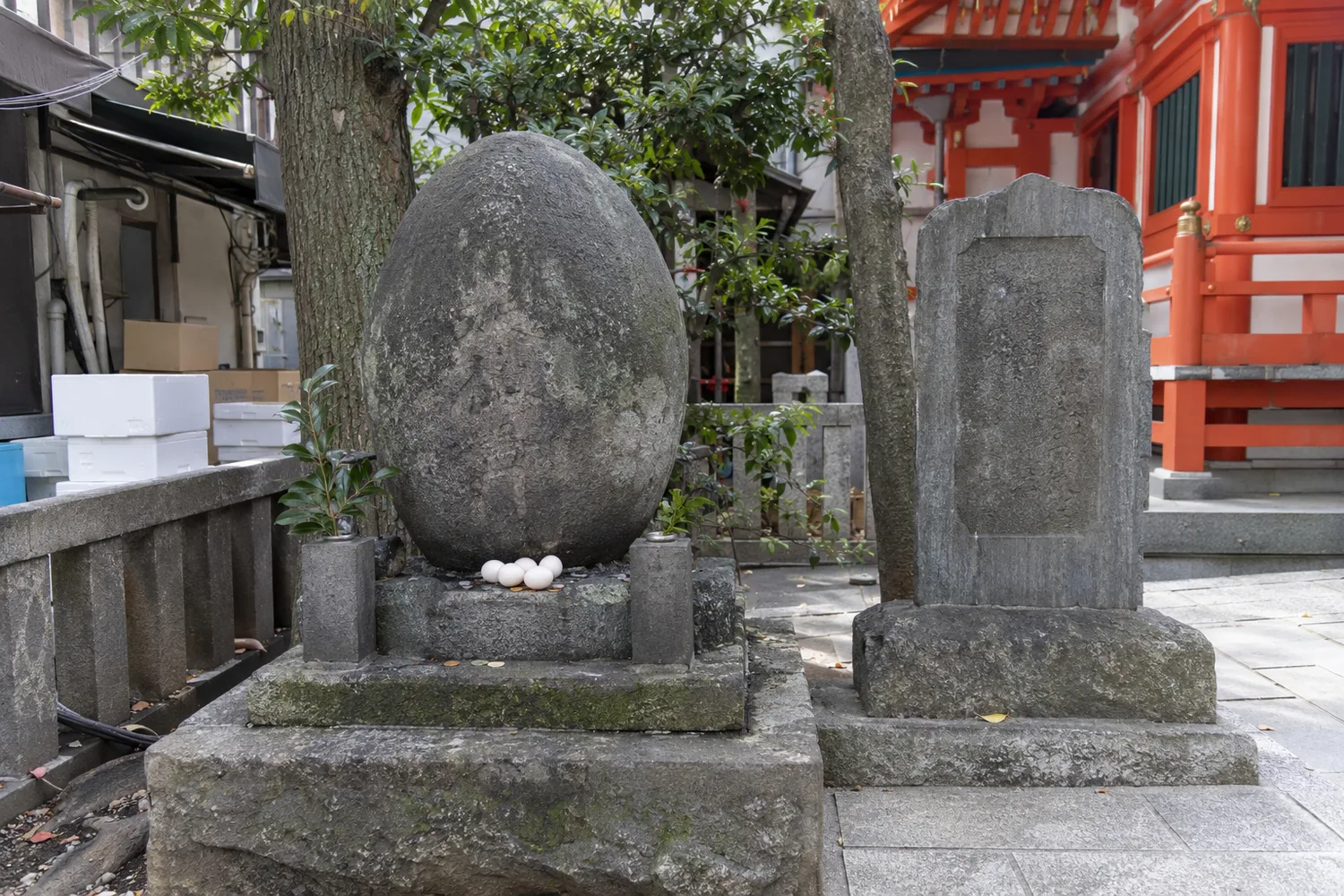
Also in the grounds are the sushi mound, the shrimp mound for tempura, and mounds for monkfish, live fish and kelp. The shrine keeps enormous carved lion heads too, which may be carried through the streets at its festival in June.
Weekday or Sunday
If you can choose, come on a weekday. On Sundays and public holidays, the market says, about a third of the shops open, mostly the places to eat. Several of the shops in the table below close on Sundays, so the slow, shop-to-shop version of this walk is a weekday walk.
If Sunday is your only day, you can still do the short version: one slice of omelette, then the egg mound. Tsukiji Yamacho lists no closing days at all. Some shops also close on the central wholesale market’s closing days, which fall on some Wednesdays as well, so check the market calendar before you go.
Before you go
| Tsukiji Outer Market | Morning until 9:00 is mainly for professional buyers; 9:00–14:00 is the market’s regular selling time, and it recommends visiting between 9:00 and 14:00. On Sundays and holidays about a third of the shops open, mostly restaurants. Some shops close on the central wholesale market’s closing days; see the calendar. Please eat inside or in front of the shop where you bought the food, and do not touch the produce. Official website: tsukiji.or.jp / calendar |
| Tsukiji Yamacho (tamagoyaki) | 6:00–15:30; no closing days listed. Address: 4-10-10 Tsukiji, Chuo City, Tokyo (東京都中央区築地4-10-10). Market listing: tsukiji.or.jp |
| Marutake (tamagoyaki) | 4:00–14:30; closing days listed as Sundays (January, August), holidays and market closing days. Address: 4-10-10 Tsukiji, Chuo City, Tokyo (東京都中央区築地4-10-10). Market listing: tsukiji.or.jp |
| Tsukiji Shoro (tamagoyaki) | 4:00–15:00; closed on Sundays, holidays and market closing days. Address: 4-13-13 Tsukiji, Chuo City, Tokyo (東京都中央区築地4-13-13). Market listing: tsukiji.or.jp |
| Tsukiji Sushitomi (sushi) | Lunch 10:30–15:00 (last order 14:30), dinner 17:00–21:00 (last order 20:30); closed at New Year. Run by Suzutomi, a wild-tuna wholesaler at Toyosu Market. Address: 6-23-12 Tsukiji, Chuo City, Tokyo (東京都中央区築地6-23-12), Akimoto Building 1F. Market listing: tsukiji.or.jp |
| Maguro-don Segawa (tuna bowls) | 7:30–12:30; closed on Sundays, holidays and market closing days. Address: 4-9-12 Tsukiji, Chuo City, Tokyo (東京都中央区築地4-9-12). Market listing: tsukiji.or.jp |
| Unitora (sea urchin) | 7:00–20:00, every day; no regular closing day. Address: 4-10-5 Tsukiji, Chuo City, Tokyo (東京都中央区築地4-10-5). Market listing: tsukiji.or.jp |
| Azuma Minamoto no Masahisa (knives) | 5:30–15:30; closing days vary, see the shop’s website. Address: 4-13-7 Tsukiji, Chuo City, Tokyo (東京都中央区築地4-13-7). Market listing: tsukiji.or.jp |
| Tsukiji Aritsugu (knives) | 6:00–15:00; closed on market closing days. If you come in the morning, resharpening takes about 30 minutes to an hour. Address: 4-13-6 Tsukiji, Chuo City, Tokyo (東京都中央区築地4-13-6). Market listing: tsukiji.or.jp |
| Fushitaka (bonito flakes, kelp) | 6:30–14:30; closed on Sundays, holidays and market closing days. Address: 6-27-2 Tsukiji, Chuo City, Tokyo (東京都中央区築地6-27-2). Market listing: tsukiji.or.jp |
| Akiyama Shoten (bonito flakes) | 5:30–13:30; closed on Sundays, holidays and market closing days. Address: 4-14-16 Tsukiji, Chuo City, Tokyo (東京都中央区築地4-14-16). Market listing: tsukiji.or.jp |
| Namiyoke Inari Shrine | The egg mound (raised in 1993) and the other food mounds are in the grounds; the egg mound’s service is held every October. Gate hours are not given on the shrine’s pages we checked; prayers (kito) are received 9:00–11:40 and 13:00–16:20. Address: 6-20-37 Tsukiji, Chuo City, Tokyo (東京都中央区築地6-20-37). Official website: namiyoke.or.jp |
| Getting there | Tsukiji-shijo Station (Toei Oedo Line), Exit A1, about 1 minute; Tsukiji Station (Tokyo Metro Hibiya Line), Exits 1 and 2, about 1 minute. |
What I would do
At Tsukiji, I would start with a slice of omelette in front of the shop that made it, then sit down to the fish, let the bamboo baskets go by, and end at the egg mound behind the market, where the people who make that omelette leave eggs once a year.
We have visited Tsukiji Outer Market for this guide. The practical information was checked against the official sources below on 27 October 2026.
- Tsukiji Outer Market official website (Japanese and English) — visiting hours, the market’s manners, its answers on bamboo baskets and Sunday opening, the guide to what the market sells, the “Tsukiwaza” shopkeeper pages, the calendar and the shop listings for Tsukiji Yamacho, Marutake, Tsukiji Shoro, Tsukiji Sushitomi, Maguro-don Segawa, Unitora, Azuma Minamoto no Masahisa, Tsukiji Aritsugu, Fushitaka and Akiyama Shoten: tsukiji.or.jp
- Namiyoke Inari Shrine (Japanese) — the shrine’s history, the food mounds and who built them, the lion heads, the yearly events and prayer hours: namiyoke.or.jp
- Photographs: the tamagoyaki skewer and the front of Tsukiji Yamacho by 経済特区 (CC BY-SA 4.0, cropped); the entrance to Namiyoke Inari Shrine by Nesnad (CC BY 4.0, cropped); the tuna nigiri and the grilled scallops by Gatorfan252525 (CC BY-SA 4.0, cropped); all via Wikimedia Commons. The lead image and the pictures of the bamboo basket, the seafood bowl, the diner line, the knife counter and the egg-shaped stone are AI-generated photo illustrations, not photographs of those places.
More in Tokyo
- Shibuya Crossing and Shibuya Sky — For the crossing seen from an open roof, with little more than your phone in your pocket
- Senso-ji and Asakusa — For the dragon carved under the Kaminarimon lantern, and the lit grounds after five
- Harajuku and Meiji Shrine — For a forest planted with broad-leaved trees instead of cedar, then a crepe on Takeshita Street
- Tokyo Skytree and Tokyo Tower — For one tower to look out from and one to look at, up its outdoor stairs
- Akihabara — For starting in Radio Kaikan, where figures share the building with vacuum tubes
- Where to Stay — For choosing where to sleep by what you want to see after dinner and before breakfast
Explore other areas
- Hokkaido — Sapporo
- Kanto — Hakone, Tokyo · You are here
- Hokuriku — Kanazawa
- Koshin-Tokai — Fuji Five Lakes
- Kansai — Nara
- Chugoku — Hiroshima
- Kyushu — Fukuoka
- Okinawa — Naha
