Nara / Guide
Kasuga Taisha Shrine, Nara: Where the 700-Yen Ticket Actually Stops
Kasuga Taisha春日大社
A word that does less work in Japanese
Eleven of the fifteen English guides I read have this shrine rebuilt every twenty years. One has it dismantled first.
The Japanese page picks a smaller word. Daishuri. A major repair.
For an afternoon I treated that as a translation quibble, and I think most people would, because something does happen here every twenty years whichever word you reach for — the buildings come apart, the craftsmen arrive, the sacred objects are remade — and none of that changes what you will be looking at on an ordinary Tuesday morning. Two words, one ceremony. I moved on.
Then I opened the page about the gate.
Many people mistake it for the main sanctuary. Please take note.
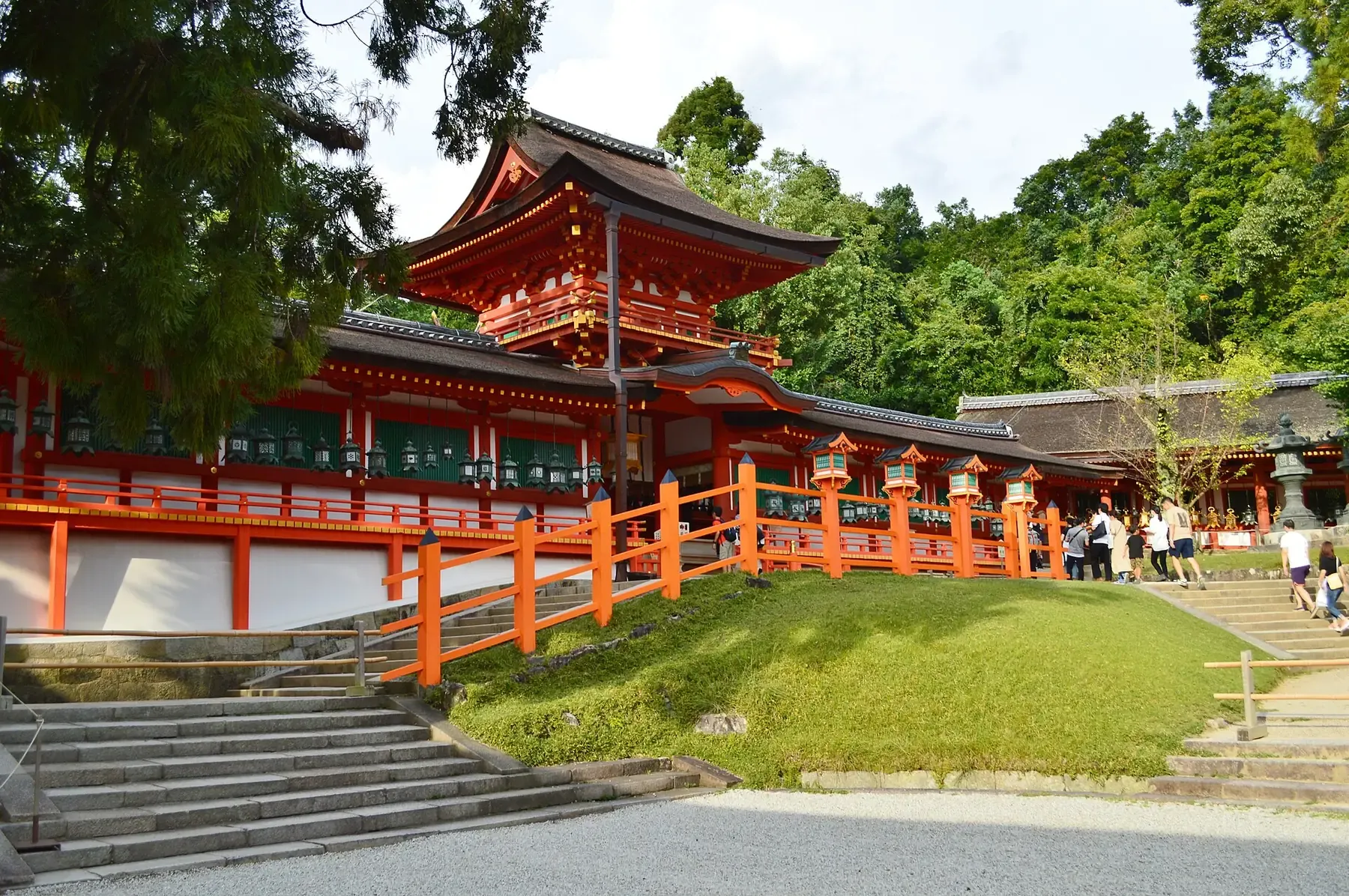
Ten metres high, vermilion, and named by the shrine as one of its representative buildings. It has a name of its own — the Chūmon, the middle gate. The four sanctuaries stand behind it.
And the shrine would like you to know that the red building in the photographs is not them.
I had been about to make that mistake in print.
6:30 — the part nobody charges for
Gates open at half past six from March to October, an hour later in winter.
General worship costs nothing, which matters here more than at most shrines, because the image this place travels on — stone lanterns in rows along the approach — stands in the part you walk through before anyone asks you for money. Donors paid for them one at a time, across several centuries.
They come in two groups, counted separately on the official page. Roughly two thousand in stone along the paths. Roughly a thousand in bronze, hanging, inside the corridors. Eleven guides give the combined figure and stop there.
The split is the useful half, because those two groups sit on opposite sides of a ticket barrier, and only one group needs a ticket.
So the lanterns you came for cost nothing. Turn up before seven.
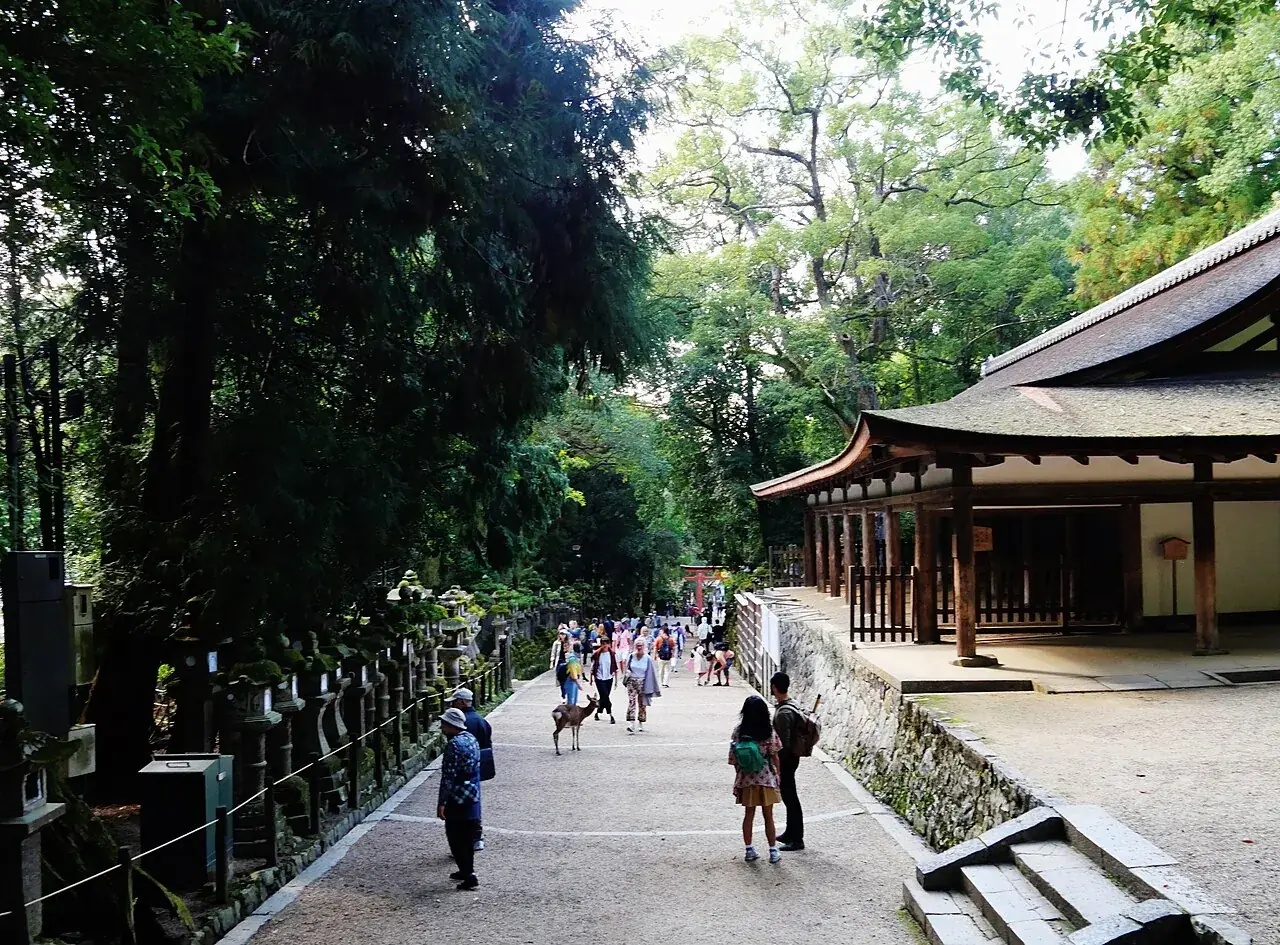
The hanging ones are the reason to keep reading.
9:00 — what 700 yen reaches
Special worship opens at nine and closes at four. Seven hundred yen.
The official page names what the ticket includes: the corridor where the bronze lanterns hang, the worship point that faces Mount Mikasa, the area in front of the middle gate, and a building called the Fujinami-no-ya.
The area in front of the middle gate. Nothing on that page promises access past it.
What stands behind that gate took some digging, and the answer came from the Agency for Cultural Affairs rather than from the shrine: four sanctuaries, National Treasures, dated 1863 — the closing years of Edo. The gate in front of them holds a lesser rank and an older date, Important Cultural Property, 1613.
Two hundred and fifty years apart, one in front of the other. Neither date reaches the shrine’s own pages.
The building in the photograph, and the buildings behind it
| Status | Date on the official record | |
|---|---|---|
| Chūmon — the vermilion gate you have seen | Important Cultural Property | 1613 |
| Honden, first to fourth sanctuaries | National Treasure | 1863 |
The shrine asks visitors not to confuse the two. One of the fifteen English guides makes the distinction.
Here the quibble stops being one.
The agency’s note on those sanctuaries runs: this building dates from 1863, and the old form has been well preserved through the shikinen zōtai. Preserved through the cycle. Not produced by it.
Six of the fifteen guides do reach the nineteenth century, so the date hides from nobody. What none of the fifteen carries is the other half.
The cycle has not always run to time.
Kasuga prints that itself, about its Wakamiya sanctuary, in the plainest way: Meiji-era administration reclassified Wakamiya as a subordinate shrine, the fixed interval lapsed, irregular repairs took over instead, and one of the gaps between them ran thirty-eight years. In October 2022 Wakamiya rejoined the twenty-year rhythm after 120 years away. The main sanctuaries kept a count of their own and finished their sixtieth cycle in November 2016.
One English guide calls the practice uninterrupted for twelve centuries. Those two sentences can sit next to each other.
10:00 — the drum downstairs is a copy
The treasure hall opens at ten. Another seven hundred yen.
Its ground floor holds a pair of dadaiko, ceremonial drums six and a half metres tall. Reproductions. The page notes in one line that a second pair, the ones those were copied from, carry National Treasure status and stand on the floor above.
That detail could have been left out. So could the sentence about the gate.
The three nights the same ticket buys something else
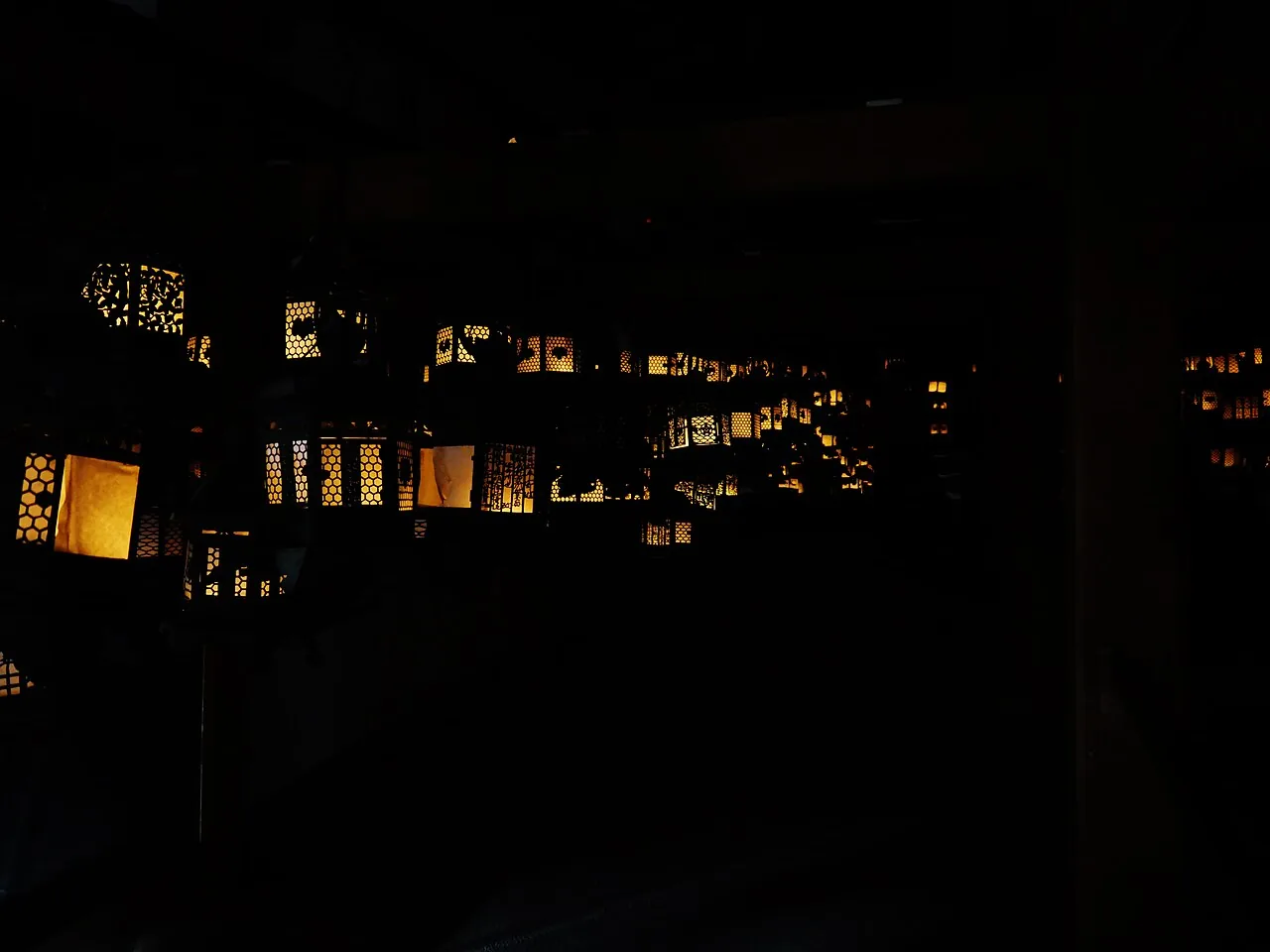
Twice a year the hanging lanterns take a flame.
Setsubun: doors at six in the evening, out by half past eight. The nights of 14 and 15 August: doors at seven, out by half past nine. Admission runs on the same 700-yen ticket.
Kasuga handles this history more carefully than the guides do. Donors once paid for oil alongside the lantern they gave, and the lanterns burned nightly while that oil lasted, until Meiji-era reforms broke the practice off — and what runs now came back in two separate pieces, the Setsubun night in 1888 and the August nights in 1929. So the mantōrō you can attend has passed a century in its present form, rather than the eight hundred years it sometimes collects.
If your dates land on one of those three nights, seven hundred yen buys something else entirely. Most dates will not.
Which brings me to the Fujinami-no-ya, and to the reason I would still pay on an ordinary Tuesday. Priests used it as their quarters until the Edo period, and it was opened to visitors, in the shrine’s own words, so that they could get a sense of the mantōrō rite — which means the lanterns inside stay lit, on the route, every day the route is open. Same ticket. No particular date.
The forest with no opening time
Behind the sanctuaries the land climbs into Kasugayama. A court order banned hunting and logging there in 841, and the woodland has carried national protection since the 1920s. Walking paths stay open. Entering the woodland itself without permission does not.
Nara Prefecture manages it, by UNESCO’s record, and describes it twice.
On its English tourism site: untouched for over 1,000 years.
In its conservation plan: the deterioration of the primeval forest has been pointed out in recent years, and the laurel forest is changing. The plan gives itself roughly a century to bring the forest back to the state it means it to hold, and a companion guide sets out the mechanics behind that sentence — fewer young trees coming through, ground cover thinning, topsoil leaving the slope, oak wilt, and deer browsing harder than the seedlings can bear.
Same prefecture, both pages. Neither hides anything, and they answer different questions for different readers.
Only one of them mentions that the hundred-year clock has already started.
Where I would put the 700 yen
One ticket, ordinary day: I would take special worship over the treasure hall.
Not for the gate. You can see the gate from outside the barrier, and I would rather you knew that before paying.
I would go in for the corridor of bronze lanterns, and then for the lit room at the end of it, because a room where the mantōrō is kept burning on an ordinary afternoon is the one thing on these grounds your camera roll does not already hold — and because the hall across the way opens its ground floor with copies of what it keeps upstairs.
I would also stop treating the stone lanterns as the ticketed attraction. Two thousand of them stand in the free part, an hour before anyone sells you anything.
Before you go
Closures are where the official pages diverge most, so these come from the shrine’s own site.
Hours, prices and the days it closes
| Grounds | 6:30 (March–October) / 7:00 (November–February), free |
| Special worship | 9:00–16:00, 700 yen |
| Treasure hall | 10:00–17:00, 700 yen |
| Botanical garden | 9:00–16:30, 700 yen, closed Tuesdays from June to March |
| Special worship closed | All day: 20 December – 7 January; around 8–13 March; Coming of Age Day. Mornings: the 1st, 11th and 21st of each month, plus seventeen further festival dates listed on the shrine’s page. Afternoon: 16 December |
The 16 December closure appears on the Japanese list and not on the English one. So do most of the morning closures.
Two more gaps to carry with you. Nara Prefecture’s tourism site still prints the inner worship fee at 500 yen, while the shrine gives 700 in four places across both of its languages; and the banner sitting on every page of the shrine’s own site reads 6:00–18:00, which matches none of the seasonal hours printed further down that same site. I would trust the seasonal ones and leave margin at both ends.
The deer on the way up run on their own contradictory numbers, and their own rule about feeding — both in our guide to the deer of Nara Park. The halls a few minutes north keep a separate argument about which parts date from when, and that one is the Todai-ji guide.
The quieter page is the useful one
Three times over, writing this, the Japanese page claimed less than the English one and turned out to hold what I needed.
A major repair, where English said a rebuild. Many people mistake it for the main sanctuary, where English said the main sanctuary. The laurel forest is changing, where English said untouched for a thousand years.
No lie sits in any of those pairs. Different people wrote them, for readers who arrive with different questions, and the cautious version tends to come from whoever will still be answerable for it in fifty years.
Read the careful page first. Then, with one ticket and an ordinary Tuesday, I would spend it in the corridor — and walk back out past the two thousand lanterns that need none.